


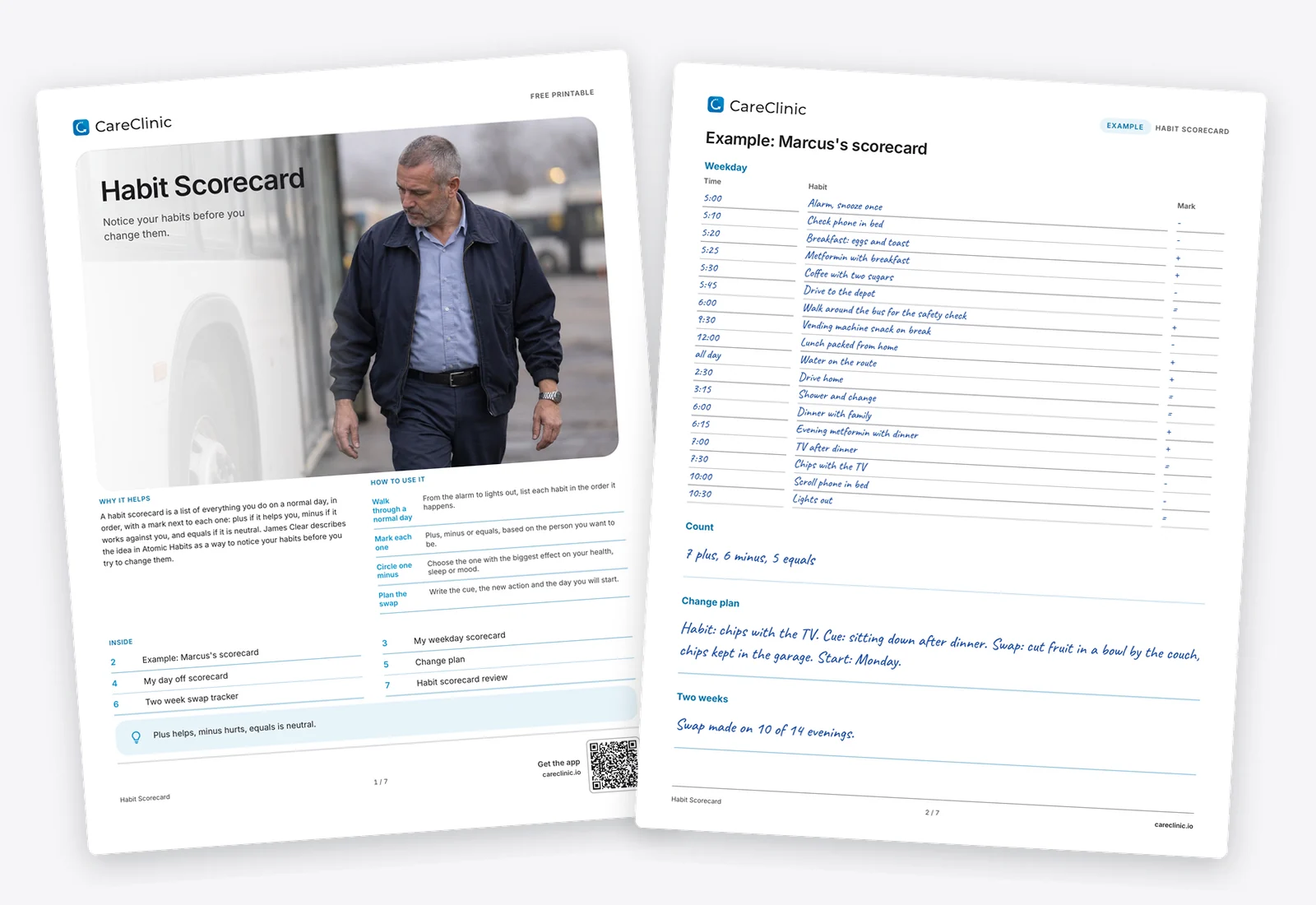
A habit scorecard is a list of everything you do on a normal day, in order, with a mark next to each one: plus if it helps you, minus if it works against you, and equals if it is neutral. James Clear describes the idea in Atomic Habits as a way to notice your habits before you try to change them.
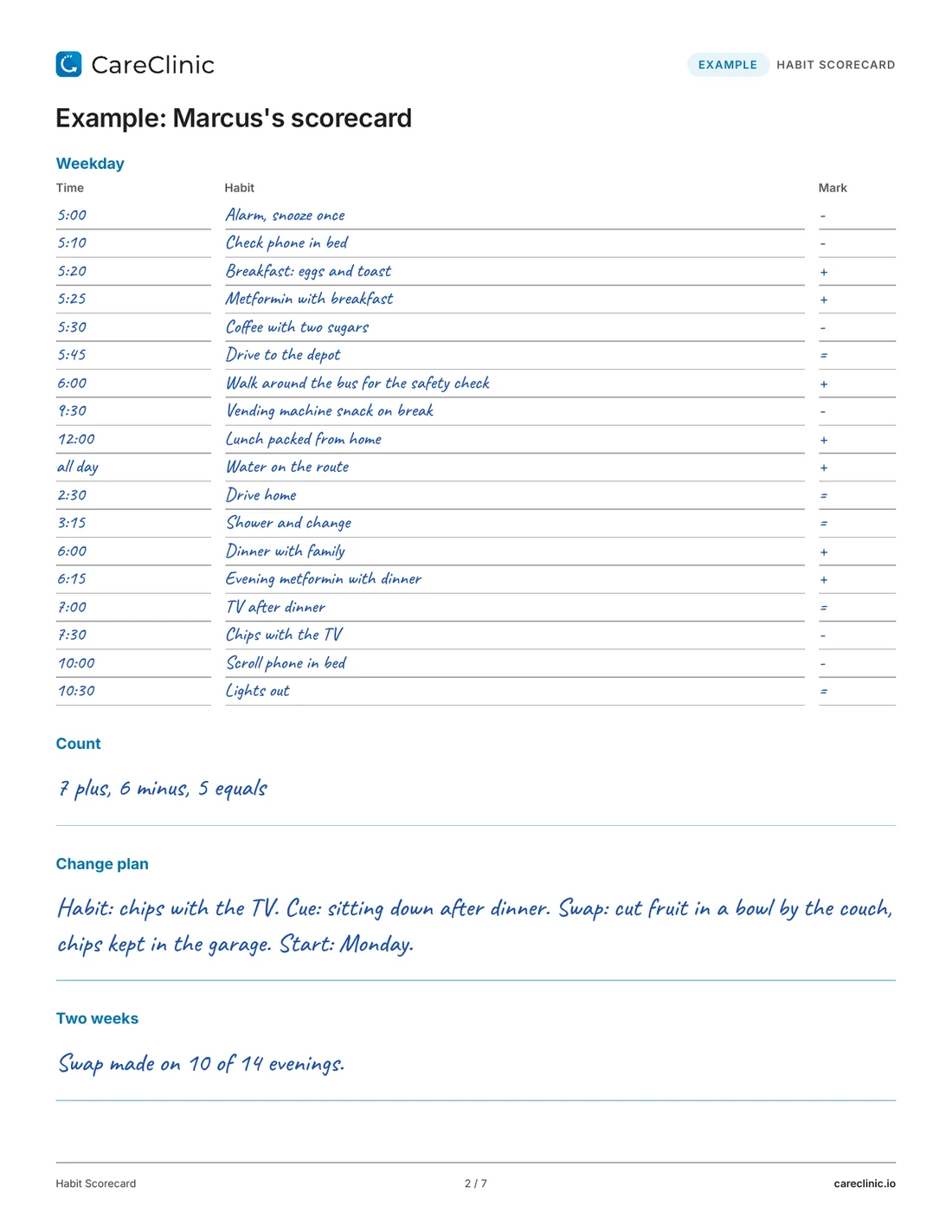
This printable walks you through one weekday and one day off, then helps you pick a single habit and plan a swap. In the filled example, Marcus lists his habits from waking up to lights out, then chooses his evening chips as the first action to change.
Download the Habit Scorecard
- Fill it in on your phone or computer, or print it
- US Letter and A4
- Includes a filled example
How it helps
See what you really do
Most habits run without thought. Writing them in order makes them visible.
Rate without blame
Plus, minus or equals, judged against your own goals.
Pick one change
Start with the habit that matters most for your health or energy.
How to use it
- Walk through a normal day. From the alarm to lights out, list each habit in the order it happens.
- Mark each one. Plus, minus or equals, based on the person you want to be.
- Circle one minus. Choose the one with the biggest effect on your health, sleep or mood.
- Plan the swap. Write the cue, the new action and the day you will start.
What is inside
- Page 1, Habit ScorecardThe cover, why it helps, how to use it and the contents.
- Page 2, Example: Marcus's scorecardA filled weekday list with marks and one planned swap.
- Page 3, My weekday scorecardRoom for 25 habits in order, with a mark and a note for each.
- Page 4, My day off scorecardThe same list for a weekend or rest day, when habits often change.
- Page 5, Change planOne habit, its cue, the new action, possible obstacles and start date.
- Page 6, Two week swap trackerA row for each day and space to note what helped.
- Page 7, Habit scorecard reviewMarks before and after, plus appointment questions.
See a filled example
The habit scorecard example belongs to Marcus. His weekday list had 18 habits: 7 plus, 6 minus and 5 equals. Two of the minuses came after dinner: chips with the TV and scrolling his phone in bed. He chose the chips. His cue was sitting down after dinner, so he kept the chips in the garage and put a bowl of cut fruit by the couch, starting on a Monday. Over two weeks he made the swap on 10 of 14 evenings.
 Open the full PDF
When to use it
Use it when you want to change something but do not know where to start, after a diagnosis that asks you to change daily routines, or when a habit tracker keeps failing because the habit you picked was not the one that mattered.
Fill it in on the evening of an ordinary day while it is fresh, or carry it with you and add habits as they happen.
Making the marks useful
Before you rate the habit scorecard, name the goal you are using. A habit may support one goal and interfere with another. Use the note column to explain a mark that feels unclear. You can leave it neutral while you gather more detail about when it happens.
Keep the weekday and day off lists separate. Work breaks, transport, meal times and evenings may look different between them. Writing both days in order can reveal a cue you would miss in a list of habits without any context. Use short phrases for the actions themselves.
A stress tracker can help you remember the circumstances around a repeated action. If a particular habit follows a long shift or a difficult conversation, add that detail to the note column. It gives you something concrete to consider when planning a different response.
Trying the change plan
The habit scorecard change plan asks for one habit, its cue and a new action. Describe the cue as something you can notice, such as sitting down after dinner or finishing a phone call. Put supplies for the new action where that moment happens. Choose a start date that gives you time to prepare.
Use the two week rows to record whether you made the swap and what affected it. A short note such as late shift or visitor explains more than an empty box. If you keep a meditation journal, you can use it for longer reflections while keeping the scorecard entries brief.
At the review, look at the marks and the notes together. You may choose to keep the new action, change its cue or try a different swap. The next habit scorecard can use the same goal, which makes it easier to understand why a mark changed between the two lists.
Tips that make it work
- Fill in the habit scorecard on an ordinary day, not a holiday or a sick day.
- Judge each habit against your own goals, not what other people think.
- Change one habit at a time and give it two weeks.
- Redo the list after a month to see what moved.
Bringing it to your doctor
Bring the completed list to your next appointment when you want to discuss how daily routines fit your care plan. Choose a few lines to talk through, then write questions about existing medicine instructions or support for a change. The review page keeps those questions next to your own observations.
Questions
What is a habit scorecard?
It is a list of your daily habits in the order they happen, each marked as helpful, harmful or neutral. The idea comes from Atomic Habits by James Clear, who uses it as a first step before changing anything.
How do you fill out a habit scorecard?
Picture a normal day from the moment you wake up. Write each habit on its own line, then add a plus, minus or equals sign. Do not change anything yet. The goal is to notice.
What are some habit scorecard examples?
A plus might be taking medicine with breakfast or a short walk at lunch. A minus might be snoozing the alarm or snacking in front of the TV. An equals might be the drive to work or a shower.
Should I change all my minus habits at once?
Choose one habit to work on first. Write its cue and the action you want to try, then use the two week rows to record what happened. Review those notes before adding another change.
How often should I redo it?
Every month or two, or after a big change such as a new job, a new diagnosis or a new medicine schedule.
Is this habit scorecard free?
Yes. This habit scorecard is a free printable PDF in US Letter and A4, with weekday and day off pages, a change plan and a filled example.
More free worksheets


References
- The Habits Scorecard. James Clear. https://jamesclear.com/habits-scorecard