
Research that hears from patients every day.
Patient-generated health data and real-world evidence, collected at home with consent from the first step.
CareClinic gives research teams a daily view of life with a condition. Participants track symptoms, medications and readings in an app built for managing their health, and your team sees what happens between visits.
Between-visit data, captured at home.
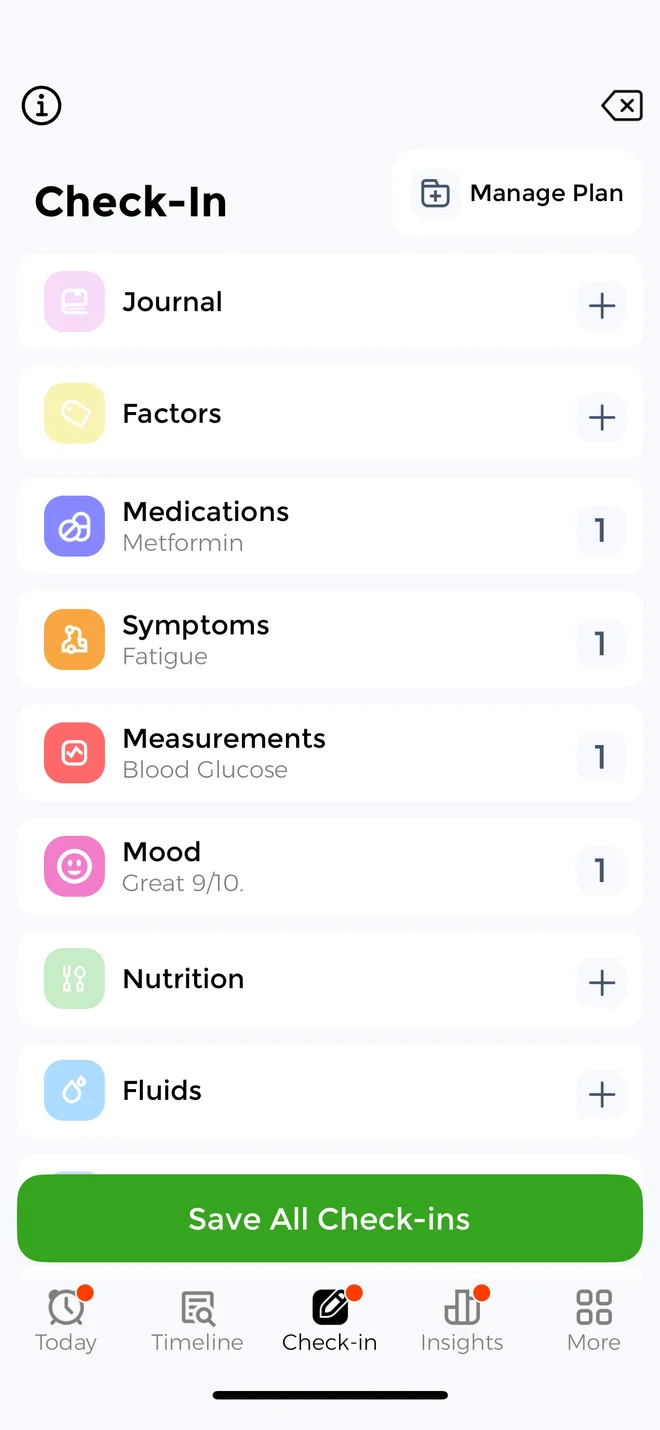
Participants log symptoms, medications and readings when they happen, in the same app they use to manage their health.
See the days between visits
You see how a condition moves from day to day, beyond the clinic snapshot. Each entry carries the time it was logged, so changes show up close to when they happen.
Take part from home
Participants join from their own phone, which suits remote and hybrid study designs. Read about the patient experience in decentralized trials.
Made for studies that run in everyday life.
CareClinic fits research where the most useful answers come from patients going about their week.
Observational studies
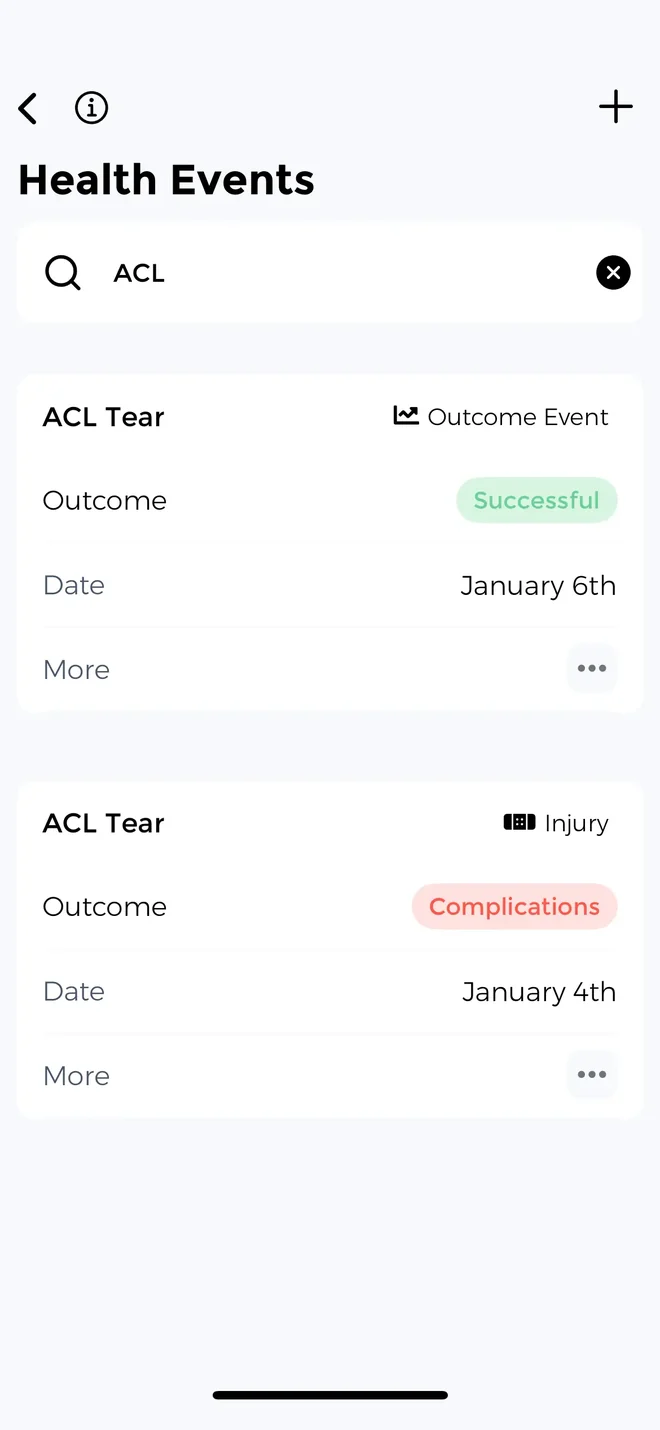
Follow how symptoms, treatments and daily habits change over months, in the order they happen, with every entry stamped with its time.
Patient registries
Give registry members an app they keep using for their own health, so the record grows between scheduled check-ins.
Post-market and PMCF follow-up
Collect patient-reported outcomes from people using a device or treatment at home. Read about patient-reported outcomes for PMCF.
Decentralized and hybrid trials
Participants enroll with a code, answer questionnaires in the app or through a secure link, and visit a site only when your protocol calls for it.
Patient support programs
Pair reminders and symptom tracking with the program your patients already join. See how patient support program software works.
Pilot studies
Try a questionnaire schedule, reminder timing and consent flow with a small group before you open enrollment to everyone.
What participants record, and what your team receives.
Participants log what they live with. Your team gets files and reports it can analyze, share and file.
In the app
What participants record
- Symptoms with a severity rating and the time they happened
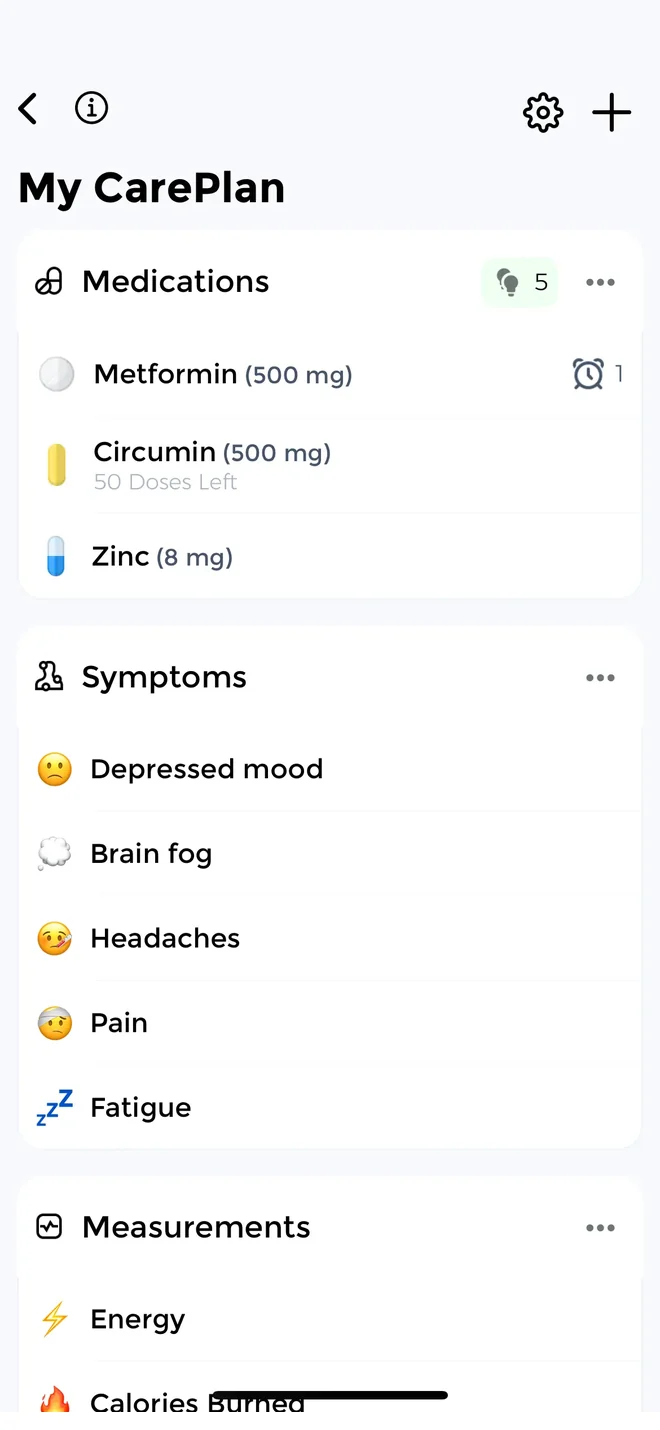
- Medications and doses, with a reminder when each one is due
- Measurements such as blood pressure, weight and blood glucose
- Mood, sleep, energy and notes in their own words
- Scheduled questionnaires such as PHQ-9, GAD-7, PSQI and WHO-5, or ones you build
- Readings from Apple Health, Health Connect, Withings, Apple Watch and Wear OS
For your team
What your team receives
- Participant-level CSV files that use study codes in place of names
- Aggregate CSV files with small groups suppressed
- PDF reports on enrollment, participant status, visits and sites
- A questionnaire completion report that flags who is falling behind
- A blinded summary for your data safety monitoring board
- A study activity log your team can review and export
Patient-generated health data for real-world evidence.
Daily entries sit alongside readings from Apple Health, Health Connect and connected devices.
Your question, their everyday data
Your team sets the question, and the data arrives in a form your analysts can use. Learn how patient-reported data supports real-world evidence.
Questionnaires and daily logs together
Scheduled questionnaires capture the moments you plan for. Daily logs and device readings capture everything in between. See how our ePRO platform fits in.
Read published research on CareClinic's patient-generated health information
How a study runs, from setup to export.
Your team sets the plan once. Participants follow it from their own phone, and you watch progress as it comes in.
-
Set up the study
Choose the trackers and questionnaires your protocol needs, set how often each one is due, and add your consent form. Participants see the plan as a care plan in the app.
-
Enroll with a code and consent
Each participant enters a study enrollment code, reads your consent form and agrees before joining. The app then opens with the study plan already in place.
-
Log daily, answer on schedule
Participants record entries whenever something happens. Questionnaires arrive in the app or as a secure web link, and anyone who has not finished gets a reminder, never more than one a day.
-
Follow completion as it happens
Your team sees enrollment, participant status and questionnaire completion for each person, so you can reach out before someone drifts away.
-
Export and report
Download CSV files for analysis and PDF reports for your sponsor, your ethics board or your safety reviewers.
Consent and privacy start at enrollment.
Each participant reads and accepts your consent form before joining, and we record the version and time.
Consent on record
Participants agree before they can enroll. You can see which version of your form each person accepted and when.
Study codes in place of names
Research views identify participants by study code. Shared results are de-identified, with small groups suppressed.
Ready for your ethics review
We share a clear description of data flows, roles and de-identification for your IRB or ethics board to review with your protocol. Read how we protect data.
Keeping participants with you for the whole study.
A study answers its question only if people keep logging. CareClinic gives them reasons to come back.
Reminders at the right moment
Participants get a reminder when a dose or questionnaire is due, and a follow-up if a questionnaire is still open.
Their own health, in one view
Participants see their own entries and trends in the app, so logging helps them as much as it helps your study.
Caregivers can help
With permission, a family caregiver can record on a participant's behalf, so data keeps coming on hard days.
In their own language
The app translates its screens on the device into many languages. Plan validated instrument translations with your protocol.
No cost to take part
Enrolled participants get premium app features sponsored by the study, so nobody pays to join.
Answers saved offline
Questionnaires can be completed without a connection and are sent once the phone is back online.
Built for complex and multi-condition populations.
Participants track the symptoms that matter to them. That suits conditions where no two patients look alike.
Trackers that fit each person
Participants add the symptoms, medications and measures that fit their condition, next to the ones your study asks for.
Rare and spread-out communities
People can take part from wherever they live. See how a rare disease patient registry can work.
More than one condition
Care plans for several conditions live in one app, so people with overlapping diagnoses use a single tool.
Context in their own words
Participants can add a note to any entry, which turns a symptom score into a story your team can read.
For sponsors, CROs, universities and patient groups.
Every team uses the same participant app and gets the reports that fit its role.
Sponsors and life sciences teams
Gather real-world evidence and post-market follow-up from patients at home. Want the study app under your own brand? See our white-label patient app.
Contract research organizations
Run the participant side of a study across sites, with completion and site reports that show where follow-up is needed.
Academic research teams
Start with a plain description of data flows and de-identification for your ethics review, then collect what participants record every day.
Patient organizations
Research runs separately from our partnership for patient organizations. Members join a study only through their own informed consent.
Questions research teams ask.
Clear answers before you plan a study.
What is patient-generated health data?
Patient-generated health data is information people record themselves outside the clinic, such as symptoms, medications, mood, sleep and readings from connected devices. In CareClinic, participants log these details as they happen, so researchers can see the days between visits.
How is real-world evidence collected from patients at home?
Participants use the CareClinic app on their own phone to log symptoms, doses and readings and to answer scheduled questionnaires. Data from Apple Health, Health Connect and connected devices can sit alongside their entries, without extra clinic visits.
Can CareClinic support decentralized or hybrid studies?
Yes. CareClinic can send questionnaires as a secure link or inside the app, with reminders for anyone who has not finished. Participants can join from home with an enrollment code, and your team follows everyone in one place.
How do participants give consent?
Each participant reads your consent form in CareClinic and agrees before joining the study. CareClinic records which version they accepted and when, and research views identify participants by study code.
What data can research teams export?
CareClinic exports participant-level and aggregate CSV files and PDF reports. Reports cover enrollment, retention, questionnaire completion and safety review, and participant-level files use study codes in place of names.
Which questionnaires can we use in CareClinic?
CareClinic works with common instruments such as PHQ-9, GAD-7, PSQI, DASS-21, PSS and WHO-5, and with disease-specific scales such as SLEDAI, CLASI, PDQ-8 and UPDRS. Your team can also build its own questionnaires. Licensed instruments are used under your own license.
How does CareClinic protect participant privacy?
Research views in CareClinic identify participants by study code. Each consent is stored with the form version, the time and the device it was accepted on, and shared results are aggregated with small groups suppressed.
Can a caregiver record data for a participant?
Yes. With the participant's permission, a family caregiver can join their CareClinic care team and record entries on their behalf. That keeps data coming on days the participant cannot log.
Does CareClinic work in languages other than English?
Yes. CareClinic includes built-in translations and translates other languages on the device. In-app translation is not a validated translation of a study instrument, so agree on instrument languages with your protocol and the instrument owner.
Do participants pay to use CareClinic in a study?
No. When a participant enrolls in a study, CareClinic turns on premium features as part of the study sponsorship, so taking part costs them nothing.
Bring the patient's voice into your next study.
Tell us about your research question, and we will show you how CareClinic can support it.