Improve the decentralized clinical trial patient experience by giving each participant a clear task schedule, confirmation of submitted data and a named support route. Assess the work of remote participation alongside the travel it removes.
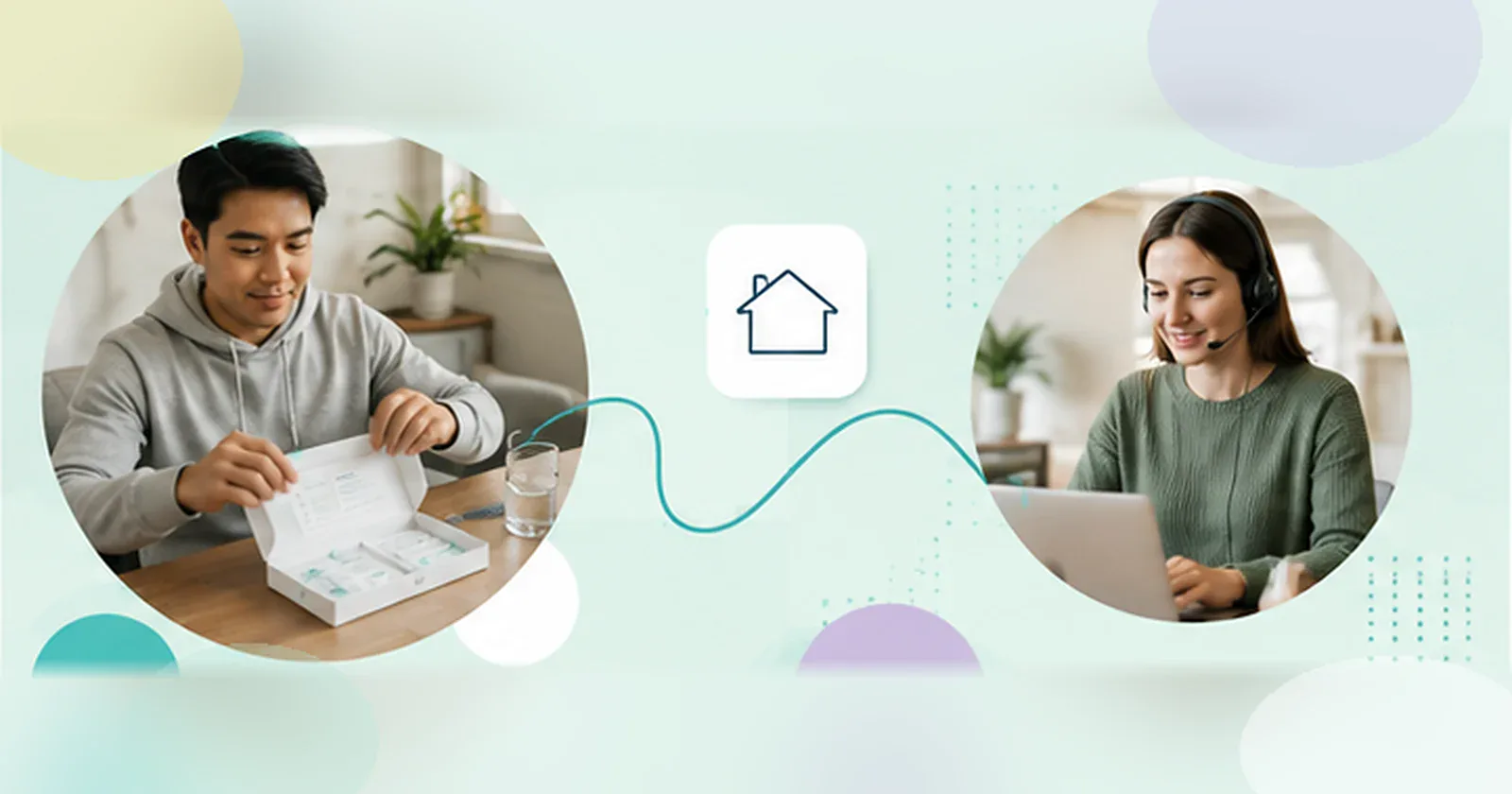
A home study kit can still leave someone coordinating a diary app, telehealth link and courier. The study team should connect those tasks into one understandable plan.
In brief: decentralized elements can reduce travel and expand access, but they should not transfer site work to participants and caregivers. A usable decentralized trial gives the participant one clear plan, one understandable schedule, reliable support and an explicit route for safety questions.
FDA's final guidance defines a decentralized clinical trial as a trial with activities occurring somewhere other than a traditional site. Those activities may include telehealth, home visits or visits with local health care providers. Read the FDA final guidance on decentralized elements.
It does not say every trial should become fully virtual. The practical design question is which activities can safely and reliably occur elsewhere and whether doing so genuinely improves the participant experience.
Does a remote trial reduce participant burden?
A remote activity removes one burden and may create another. Telehealth can eliminate travel while making a participant find a private space, test a camera and navigate a new platform. Home data collection can reduce site visits while adding charging, pairing, cleaning and shipping tasks.

| Decentralized element | Burden it may reduce | Burden it may create |
|---|---|---|
| Remote consent | Travel and scheduling before enrollment | Long documents on a small screen, identity questions and less confidence about whom to ask |
| Telehealth visit | Time away from work, transport and caregiver travel | Connectivity, privacy, accessibility and unfamiliar software |
| Home visit | Travel for procedures or assessments | Coordinating availability, home privacy and unfamiliar personnel |
| Direct-to-patient shipment | Site pickup and repeated travel | Delivery timing, storage, accountability, returns and missed packages |
| Digital health technology | Manual recording and clinic-based measurements | Charging, wearing, pairing, updates, replacement and support |
| ePRO or electronic diary | Paper forms and recall at a later visit | Daily notifications, response windows, duplicate apps and forgotten credentials |
The goal is not to eliminate every task. Clinical research requires effort from participants. The goal is to make each task necessary, understandable and proportionate.
How can sponsors improve the decentralized clinical trial patient experience?
Protocol teams often see visit numbers, windows and assessments. A participant sees Monday morning before work, a child who needs care, a package at the front door and several reminders that appear without context.
A useful participant journey map should show:
- what the participant receives before enrollment;
- who introduces the study and confirms legitimacy;
- which accounts and devices are required;
- what is due each day and how long it takes;
- which tasks require a caregiver or another person;
- how shipments, returns and replacements work;
- what happens when the person travels or changes time zones;
- who provides technical, clinical and urgent support; and
- how the participant knows the study received the data.
A 2025 qualitative study of participants in the ACTIV-6 decentralized trial found that remote procedures and digital health technologies could feel efficient and engaging, while also surfacing trust and legitimacy concerns. That is a useful reminder: a smooth workflow begins with confidence that the study and its communications are real. Read the ACTIV-6 participant-experience study.
One participant should not need a systems diagram
A sponsor may reasonably use different vendors for consent, EDC, ePRO, telehealth, devices, central laboratory, logistics and payments. The participant should not have to understand the vendor map.
At minimum, provide:
- one study identity across messages and applications;
- a single understandable schedule of participant tasks;
- consistent naming for visits and assessments;
- one support entry point that can route the issue internally;
- clear confirmation when data or a task has been received;
- no duplicate reminders from systems that do not share status; and
- a contingency plan when one vendor service is unavailable.
Avoid "vendor-shaped participation": the study should not ask participants to repeat the same information simply because two systems cannot exchange it. Integration problems belong to the study team, not the participant.
Clinical trial patient engagement: a participant task schedule
Electronic clinical outcome assessment (eCOA) covers electronic patient-reported outcomes (ePRO), clinician-reported outcomes, observer-reported outcomes and performance outcomes. An electronic diary is not automatically a validated outcome measure, so compare the proposed measure and its evidence alongside the task schedule, response windows and support plan.
Consider a hypothetical participant week for a protocol that includes a daily ePRO diary, one remote visit and a kit return. On Monday, the participant checks the week's tasks and confirms that the kit and approved instructions have arrived. Each day, the schedule shows the diary's protocol-defined response window and confirms receipt after submission.
On Wednesday, the schedule shows the remote visit time in the participant's local time zone, the visit link and the contact to use if joining fails. On Friday, it shows the agreed kit-return task, where to find the approved packing instructions and whom to contact about a missed pickup. The study team owns coordination between vendors.
If the diary cannot be submitted, the participant sees the technical support route and the study's approved contingency instructions. Staff distinguish a missing entry from a normal result, and the system should avoid duplicate reminders for a task already received. Clinical concerns follow the study's separate safety instructions.
Use digital health technology only where it earns its place
FDA's final guidance on digital health technologies for remote data acquisition asks sponsors to consider selection, verification, validation, usability, participant training, risk and data management. Read the FDA guidance on remote data acquisition.
The study should be able to explain:
- why the measure is needed;
- why the selected technology is appropriate;
- how participants learn to use it;
- what happens when it is lost, damaged or not worn;
- how the study distinguishes missing data from a normal result;
- how updates and compatibility are managed; and
- whether a participant can continue when the technology fails.
A remote measure is not automatically better than a short site assessment. It is better when it provides useful data with less total burden and acceptable risk.
BYOD is convenient until it excludes somebody
Bring-your-own-device can reduce provisioning and let participants use a familiar phone. It can also exclude people with an unsupported device, limited storage, older software, low data access or discomfort using a personal device for research.
The DCT plan should address:
- minimum device and operating-system requirements;
- accessibility and language support;
- data and battery use;
- shared phones and caregiver-assisted use;
- participants who need a provisioned device;
- phone replacement during the trial; and
- offline or low-connectivity participation.
The right answer may differ by cohort. A small rare disease trial with international families may need a more flexible support model than a short local study.
Who is responsible in a decentralized clinical trial?
The sponsor, investigator, site, local provider, home-health professional, technology vendor and courier may all perform parts of the trial. The protocol and agreements still need to define who is responsible for each activity.
FDA issued final E6(R3) guidance in September 2025. It emphasizes quality by design, participant protection, reliable results and risk-proportionate approaches across modern trial designs and technologies. Read the FDA E6(R3) Good Clinical Practice guidance.
A participant should know which issues are technical, which are clinical and which require urgent action. The site or designated study team remains a recognizable point of accountability even when services are distributed.
Choose the smallest participant stack that can run the protocol
| Participant technology | Useful when | Does not replace |
|---|---|---|
| Secure web portal | Tasks are occasional and participants can use a browser | Device integration, offline collection or frequent mobile engagement |
| Focused ePRO/eDiary | The main recurring task is a scheduled questionnaire or diary | Consent, telehealth, investigational-product logistics, EDC or CTMS |
| Study companion app | Participants need a recurring schedule, reminders, content, tracking and one study identity | Site oversight, safety monitoring and complete clinical operations |
| Full DCT platform | The sponsor needs several remote services coordinated across a broader program | A protocol-specific operating model and participant support team |
Smaller sponsors do not need to imitate the largest DCT technology stack. They need a reliable participant layer and clear integrations with the systems that remain authoritative.
For participants who find this article: a decentralized or hybrid trial allows some study activities to happen away from the main site. It should still explain who is responsible for your care and study questions, how your information is reviewed and what to do when technology or a shipment does not work.
AI should not become an unofficial study coordinator
AI may help participants find approved study instructions, help support staff classify a technical issue or summarize a task history for human review.
It should not improvise protocol instructions, determine eligibility, replace informed-consent discussion, decide whether a symptom is urgent or create treatment advice outside the study's governed process.
The study should define the exact AI task, approved source material, escalation route, audit needs and human owner.
Where might CareClinic fit in the decentralized clinical trial patient experience?
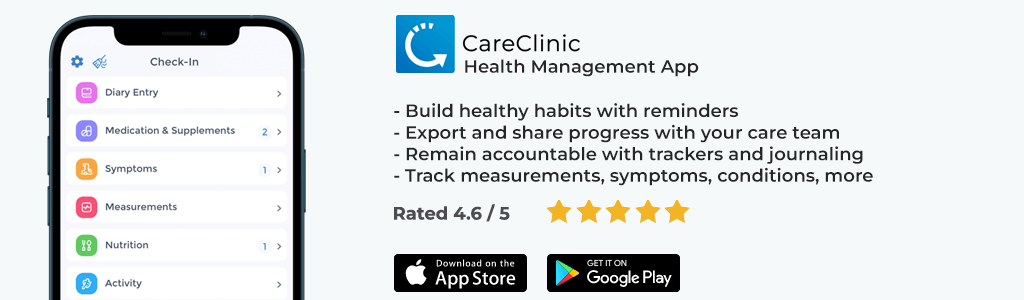
CareClinic provides a participant-facing foundation for longitudinal tracking, including symptoms, medications, measurements, mood, sleep, activity, journals, assessments, reminders, care plans and reports.
For a smaller hybrid or decentralized trial, that foundation may support a study diary, recurring ePRO, medication or device-use log, participant reminders and a clearer mobile experience between remote visits.
CareClinic should not be described as a complete decentralized clinical trial platform by default. eConsent, randomization, investigational-product logistics, telehealth, home nursing, site oversight, safety monitoring, EDC/CTMS and other protocol functions require separate systems or scoped implementation.
Related CareClinic guides
- Electronic Patient Diary Software Beyond Traditional ePRO
- The Device Is Ready. The Patient App Is Not.
- A Reminder Is Not a Patient Support Program
Map the participant's week with us
Share the study type, participant population, remote activities, devices, diaries, visit schedule, support plan, safety workflow and required integrations. The CareClinic team can assess where a focused participant layer fits.
Discuss a Hybrid or Decentralized Trial
Choose Patient Reported Outcomes (ePRO) for a trial diary or participant questionnaire workflow. Choose OEM or White Label when the sponsor or CRO needs a branded participant experience. Do not include participant information in the inquiry.
Frequently asked questions
What is a decentralized clinical trial?
It includes one or more trial activities that occur away from a traditional investigative site, such as telehealth visits, home visits, local health care, direct shipment, remote consent or digital data collection.
Does a decentralized trial have no clinical site?
Not necessarily. Many trials are hybrid. A traditional site may remain responsible while selected activities occur remotely or through local providers.
Does remote participation always reduce burden?
No. It can reduce travel while adding devices, logins, shipments, self-administration tasks, connectivity problems or caregiver work. Burden should be assessed across the complete participant journey.
Can participants use their own phones in a DCT?
A bring-your-own-device approach may be appropriate when the protocol, population, software, accessibility, support and contingency plan make it suitable. The study should address participants who cannot or do not want to use a compatible personal device.
What is the role of ePRO in a decentralized trial?
ePRO can collect symptoms, function, quality of life, treatment experience and other outcomes directly from participants. It is one decentralized element and does not by itself provide consent, telehealth, investigational-product logistics or full trial management.
Who supports participants when technology fails?
The protocol and operating model should name the responsible support route. Participants should not have to guess whether to contact the site, sponsor, CRO, device vendor, courier or app provider.
Can CareClinic run a fully decentralized trial?
CareClinic can be evaluated as a participant-facing layer for tracking, diaries, assessments, reminders and longitudinal information. A complete DCT also requires study oversight, sites, consent, safety monitoring, logistics, EDC or CTMS functions and other protocol-specific services.
Can AI help participants in a remote trial?
AI may support navigation, approved information retrieval or bounded administrative tasks. It should not improvise protocol instructions, determine eligibility, replace safety monitoring or create unreviewed medical guidance.
How should a small sponsor choose decentralized elements?
Start with participant burden and the protocol objective. Add remote elements only where they improve access, data quality or feasibility, and confirm who owns each operational and safety responsibility.
Educational information only. This article is not regulatory, clinical, ethical, privacy, statistical, GCP or trial-operations advice. Sponsors, CROs and investigators should assess their protocol, population, jurisdictions and responsibilities with the appropriate professional advisers.