


A good migraine tracker app warns you before an attack builds, takes a quick log on a bad day and gives your neurologist a clear picture. Here is how UniqueHuman and CareClinic handle each part, and where each one fits.
UniqueHuman is an iPhone app built around passive monitoring. It reads signals from an Apple Watch, Oura ring or Garmin device in the background and pairs them with Niq, an AI companion you can talk to or text. CareClinic starts with a simple log of each attack and runs on iPhone, iPad, Android, the web and Mac. You turn on only the trackers you need, and you can add more later.
What the best migraine tracker app should do for you
During an attack there is little room for typing. A good app asks for very little on a bad day and still builds a useful record over time. Look for these four things.
- Fast logging during an attack, with the start and end time, where it hurts and how bad it is.
- Triggers recorded with little effort, such as weather and sleep that come in on their own.
- Patterns you can read at a glance, so you see what tends to come before a flare.
- A record your neurologist can use, with dates, rescue medication and how well it worked.
It also helps when the app stays out of your way. Most people with migraine do not need every tracker on day one. They need a short log they will keep using, with room to add more when a new question comes up.
How UniqueHuman and CareClinic approach migraine
UniqueHuman: passive signals and an AI companion
UniqueHuman arrived on the App Store in March 2026, and you may see it called the Unique Human migraine app. It is built for migraine and for conditions that are hard to see from the outside, such as fibromyalgia, POTS and long COVID. The idea is that you should not have to log much by hand. Sleep, stress and wearable data come in through Apple Health, Apple Watch, Oura and Garmin, and the app compares them with your own baseline.
Niq takes text and voice journal entries and answers questions when you ask. UniqueHuman says Niq remembers your symptoms, triggers, medication, appointments and how you responded to treatment. Its terms also describe access to US clinicians through an independent provider network.
CareClinic: a simple log you can grow
CareClinic is a symptom tracker app and chronic illness app that supports more than 3,500 conditions, migraine included. Day to day, you log a headache, rate it and note what you took. You enable only the trackers you need, and the others stay off. If your neurologist later asks about sleep or your cycle, you can turn those on or add a care plan without starting over.
The app starts simple and still handles more complex care, such as several conditions, a caregiver managing a dependent's profile or a full set of records. It suits people of any age, from teens to older adults and the family members helping them.
Over time the app charts how your symptoms connect, marks your flares and gives you a flare risk forecast. Carey, its AI health assistant, answers questions from your own logs and records.
Logging a migraine attack in CareClinic
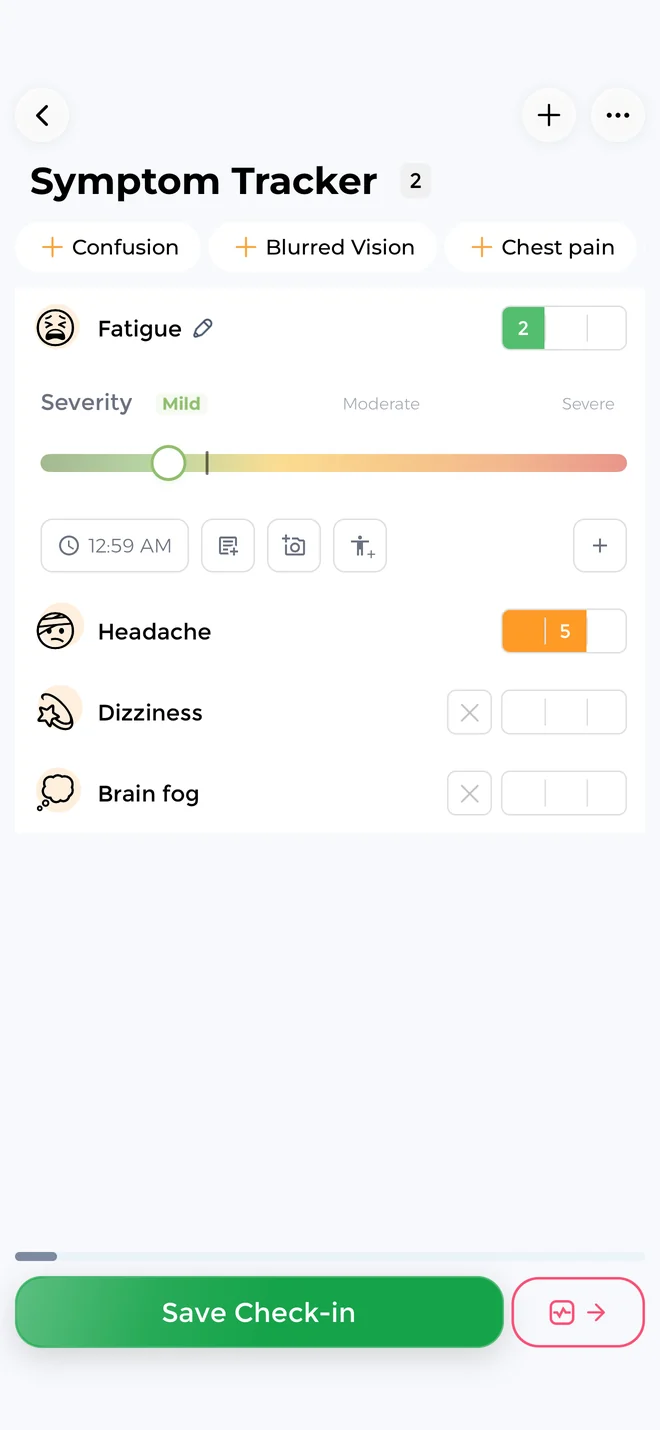
A good attack log captures the same few details each time. You can log the start of an attack while it is happening and add the end time once it passes.
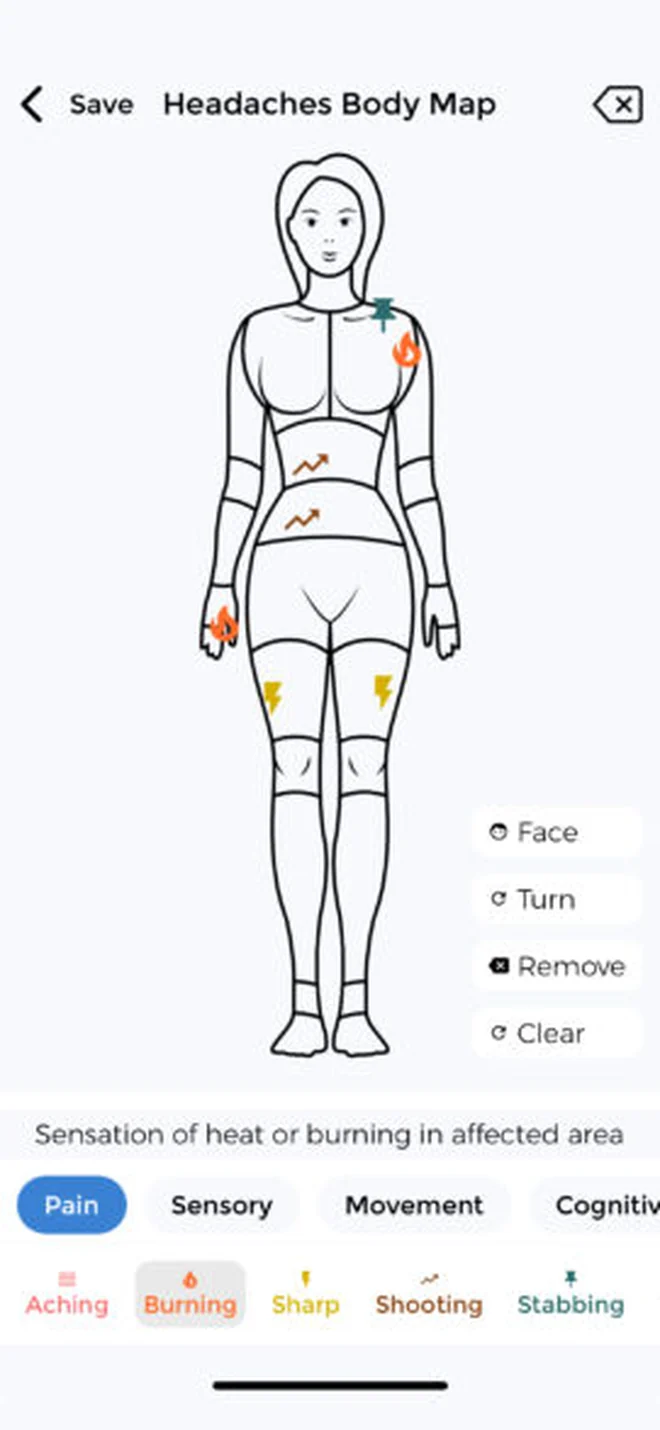
When it starts, when it ends and where it hurts
Each symptom gets a start time and an end time, so after a few months you can see whether your attacks are getting shorter or longer. On the body map you tap the spot, such as behind the left eye or across the forehead, and then rate the severity.
Aura and other symptoms
Aura, nausea, light sensitivity and neck stiffness can each go in as their own symptom with their own severity and timing. That shows you whether your aura starts well before the pain or alongside it. The built-in symptom list is long, and if something you feel is missing, you can add it.
Rescue medication and whether it helped
Add your triptan or other rescue medication to the medication tracker and mark it as taken when you use it. Your taken and missed history then sits next to each attack, and the end time shows how fast relief came. If you also take a preventive, reminders and refill alerts help keep it on schedule. To add a medication quickly, you can photograph the bottle or label.
If you are weighing the two apps, this is how the details of an attack line up.
| Attack detail | CareClinic | UniqueHuman |
|---|---|---|
| Start and end time | Yes, per symptom | Episode duration |
| Pain location | Body map | Not listed |
| Severity | Yes | Yes |
| Aura and other symptoms | Yes, each timed | Yes |
| Rescue medication | Taken and missed | Yes |
| Weather | Logged automatically | From location |
| Sleep | By hand or synced | From wearables |
| Cycle day | Symptoms by phase | Hormonal phases |
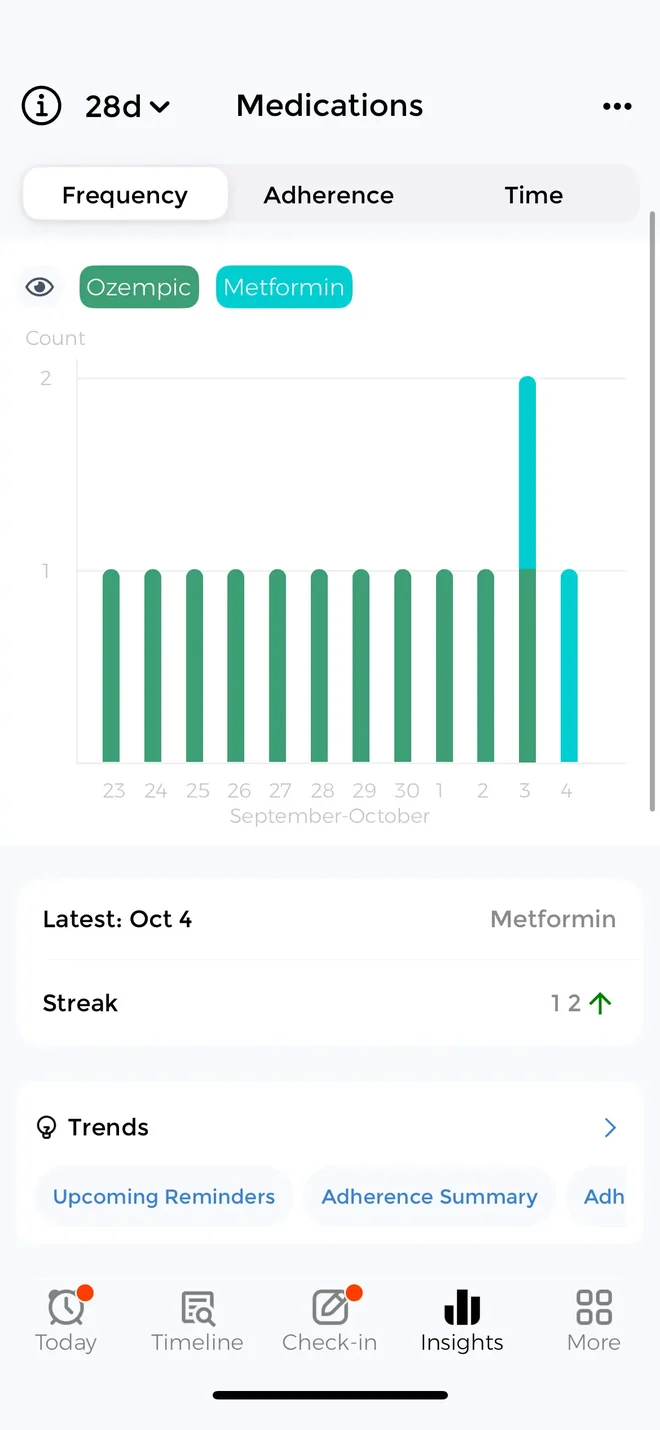
CareClinic vs UniqueHuman for spotting a flare
Flare spotting is the center of UniqueHuman. CareClinic comes at it from two directions, with a forecast that looks ahead and charts that look back at what came before each flare.
CareClinic as a flare tracker
A flare risk percentage
The symptom forecast reads your recent logs and patterns and gives you a flare risk percentage. A number is easy to act on. For example, on a high day you might move a busy meeting, rest earlier or keep your rescue medication close.
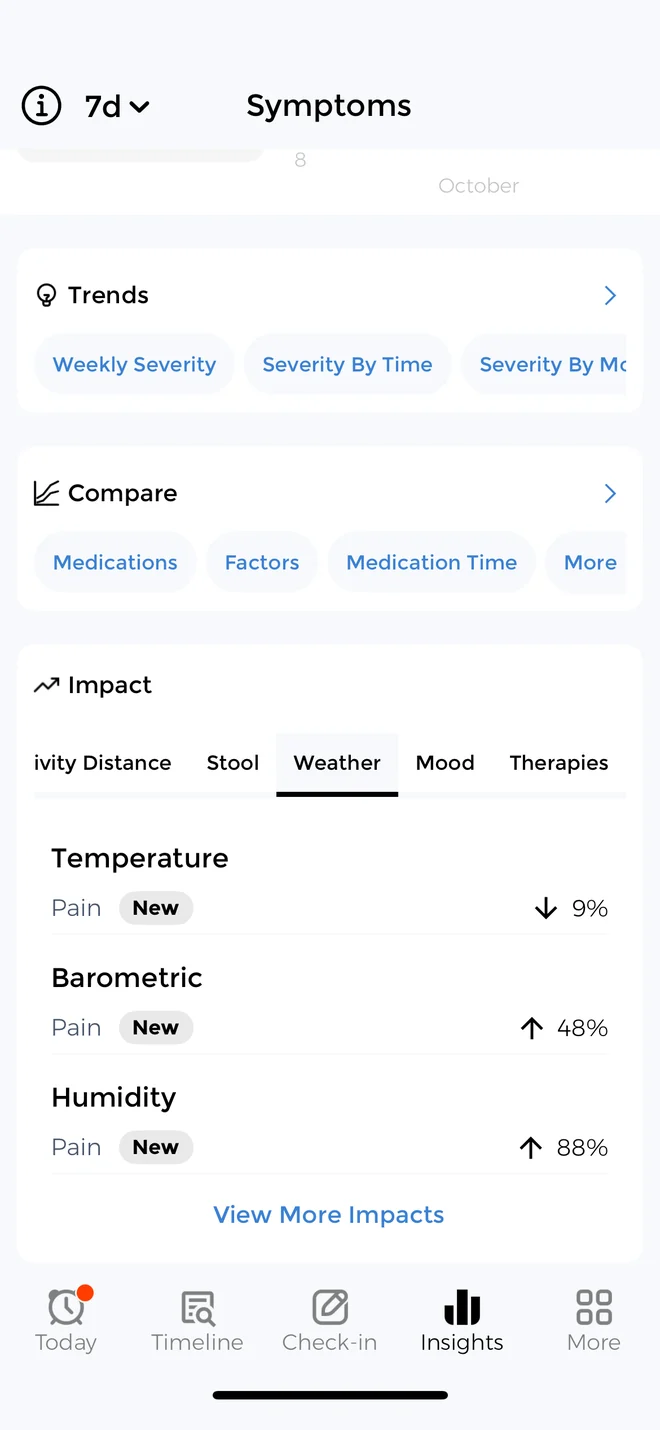
Flare trends and correlations
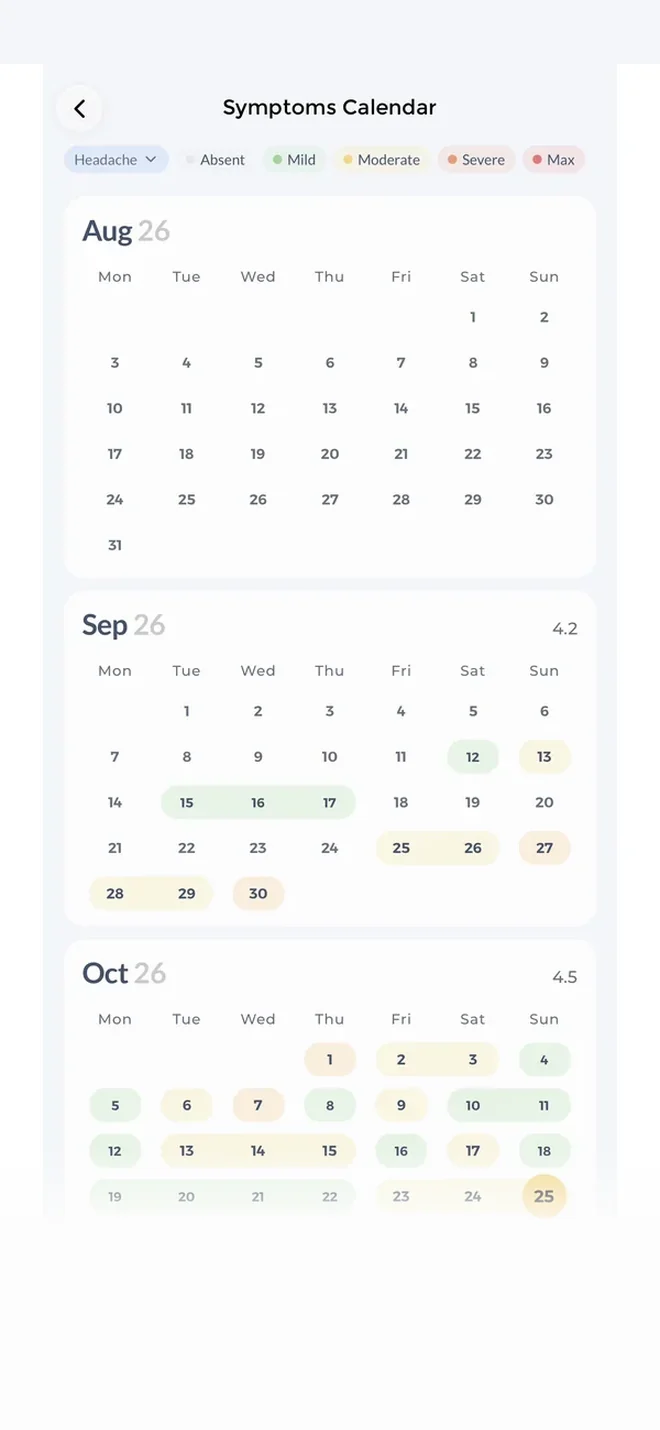
Your symptom tracker charts include a flare trend, so you can see what was happening in the days before each one. Correlations show which factors tend to move with your migraine, such as short sleep, a skipped meal or a change in the weather. Patterns you only half noticed become easy to see.
Data from the phone and watch you already own
Your forecast and charts can also draw on data your devices already collect, whichever phone you use.
iPhone and Apple Watch
CareClinic reads from Apple Health and has its own Apple Watch app, so data your watch shares with Apple Health can flow into your record.
Android and Fitbit
On Android, CareClinic reads from Health Connect, which carries data from Samsung and Pixel watches. Fitbit also connects directly.
Garmin, Oura and Dexcom
CareClinic also connects with Garmin, Dexcom and Oura on either phone. Your watch, ring or glucose monitor can then add its data to the same record as your attacks.
UniqueHuman's Flare-Up Monitor
The Flare-Up Monitor reads your sleep, stress, symptom history and signals from Apple Watch, Oura or Garmin, then compares them with your own baseline. Through the day it shows whether it sees minor or major signs of a flare. UniqueHuman says it holds back alerts when it lacks enough data. The monitor works best when you wear a supported device every day.
Tracking your triggers without extra work
A migraine tracking app is most useful when it records the likely triggers for you. Weather, sleep, meals and your cycle are the usual suspects, and you only need to turn on the ones you want to watch.
Weather
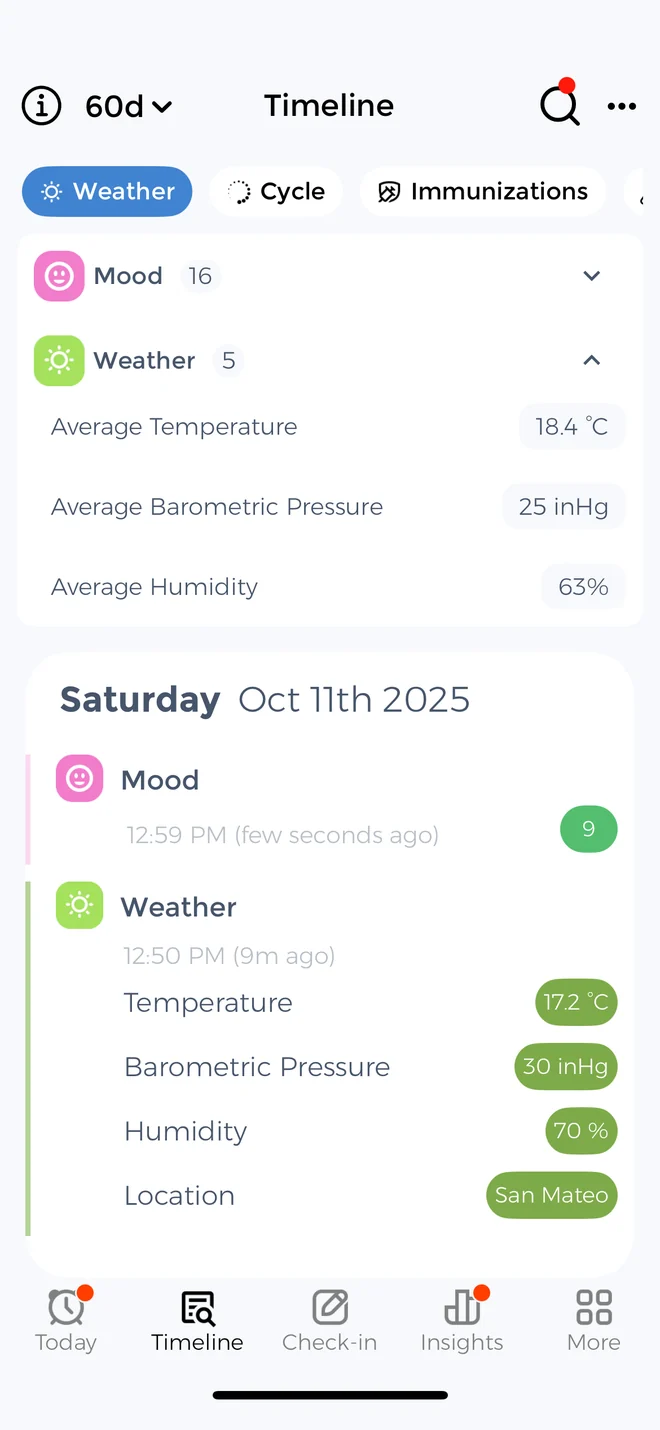
Many people with migraine suspect the weather. CareClinic's weather tracker logs local conditions automatically, so you never have to remember. Your charts then show whether attacks cluster around weather changes.
Sleep, food and water
Sleep can sync from Apple Health, Health Connect or a connected Garmin or Oura device, or you can log it by hand. Food and water each have their own section, and meal photo scan fills in a meal from one picture when you have little energy to spare. Stress and anything else you suspect can be logged as a factor, and each one can then show up in your correlations.
Your cycle
Many people notice migraines around their period. If that sounds like you, turn on the period tracker. It predicts your period and ovulation, and the symptoms by cycle phase view shows whether your attacks cluster in a certain phase. For more detail, you can also log flow, spotting and temperature.
When migraine is not the only thing you track
Many people with migraine also live with another condition. UniqueHuman is built for several, including fibromyalgia, POTS and long COVID, and it uses the same flare monitoring and Niq for each. In CareClinic you can add a guided care plan when you need one, and it helps you set up tracking for a new diagnosis.
POTS and fibromyalgia
For POTS, you can log heart rate, blood pressure and other vitals or sync them from your phone, with fluids tracked alongside. Energy tracking and pacing trends then help you plan your day around how you feel. For fibromyalgia, the same body map you use for head pain covers the whole body, so widespread pain is easy to record.
PMDD and anxiety
Mood symptoms can sit next to your cycle, and the symptoms by cycle phase view shows whether they follow it. If anxiety comes with your attacks, you can track your mood next to your migraine log. CBT lessons and calming soundscapes are there when you want them.
Tracking for a child or teen? The CareClinic Care Team lets a parent or caregiver manage a dependent's profile and log for them. You can also invite a partner, parent or friend with a link and choose what each person can see.
Your health record and the neurologist visit
A neurologist usually wants to know how often attacks happen, how long they last and what you took. Before a visit, you can create a PDF doctor report for the date range you choose or export your data as CSV.
CareClinic also keeps a health record, which many trackers do not have. It holds lab results, imaging, immunizations and medical documents, so your scan reports and blood work are kept in the same app as your attack history. On iPhone you can also import hospital records through Apple Health Records.
Carey, CareClinic's AI health assistant, answers questions from your own logs and records and sums up the patterns it finds. You can speak to Carey and hear its replies, which helps when looking at a screen hurts.
UniqueHuman vs CareClinic side by side
| Feature | UniqueHuman | CareClinic |
|---|---|---|
| Devices | iPhone | iPhone, iPad, Android, web, Mac |
| Attack log | Intensity, duration, triggers | Body map, severity, start and end |
| Flare spotting | Flare-Up Monitor | Flare risk forecast and trends |
| Weather | From location | Logged automatically |
| Health data | Apple Health, Apple Watch, Oura, Garmin | Apple Health, Health Connect, Fitbit, Garmin, Oura, Dexcom, Apple Watch app |
| AI assistant | Niq, text and voice | Carey, text and voice |
| Doctor reports | PDF by date range, CSV | |
| Health record | Connected providers | Labs, imaging, documents, Apple Health Records |
| Cycle tracking | Hormonal phases | Predictions, symptoms by phase |
| Energy pacing | Fatigue and crashes | Energy and pacing trends |
| Caregivers | Not listed | Care Team, dependent profiles |
| Mental health tools | Voice journaling | CBT lessons, soundscapes, journal |
| Community | Not listed | Yes |
| Privacy | Built to HIPAA security standards, encryption, no sale of data | HIPAA compliant, GDPR and PIPEDA aligned, AES-256 encryption, no sale of data, no AI training |
| App lock | Not listed | Face ID or passcode |
UniqueHuman suits someone with an iPhone who wears a supported watch or ring every day and wants the app to do most of the watching. CareClinic suits someone who wants a clear record of each attack on any device. It starts as a short log, and you add more only when it helps.
Comparing other options too? Read CareClinic vs Migraine Buddy or browse all CareClinic app comparisons.
Questions about UniqueHuman and CareClinic
Cost, safety and reviews
Is the Unique Human app free?
Yes, at the time of writing. UniqueHuman is free to download and use, and its App Store page lists no in-app purchases. However, its terms leave room for paid features later.
Is the Unique Human app legit?
It is a real App Store app from UniqueHuman Inc., listed since March 2026. The company says it builds to HIPAA security standards, encrypts your data and does not sell health data. Those are its own statements, and its terms say Niq's answers are not medical advice. CareClinic matches each of those points. It is HIPAA compliant and aligned with GDPR and PIPEDA, encrypts data with AES-256 at rest and TLS in transit, never sells health data or uses it for AI training, and lets you lock the app with Face ID or a passcode.
What do Unique Human app reviews say?
One App Store reviewer wrote that it surfaced migraine patterns they were only vaguely aware of. The practical limits are that it runs on iPhone only and that the Flare-Up Monitor depends on a supported wearable.
Choosing and using the apps
Does UniqueHuman work on Android?
Not that we could find. UniqueHuman is listed for iPhone on the App Store, and we found no official Google Play listing at the time of writing. CareClinic works on Android, iPhone, iPad, web and Mac, and it has an Apple Watch app.
What is a good UniqueHuman alternative?
If you want a migraine tracker app that also works on Android and the web, CareClinic is one to try. It gives you a simple attack log with a head pain body map. Over time it adds a flare risk forecast built from your own patterns.
Can CareClinic predict a migraine flare?
It can show your flare risk. The symptom forecast gives a flare risk percentage based on your own logged patterns. The flare trend and correlations in your charts show what tended to come before past flares, so you can plan ahead.
Can I use UniqueHuman and CareClinic together?
Yes, though most people will not need both. CareClinic reads Apple Health and connects with Garmin, Dexcom and Oura, so sleep and heart data from your watch or ring can land in the same record as your attack log. If you like UniqueHuman's passive monitoring, you can keep it running and use CareClinic as your main record.