
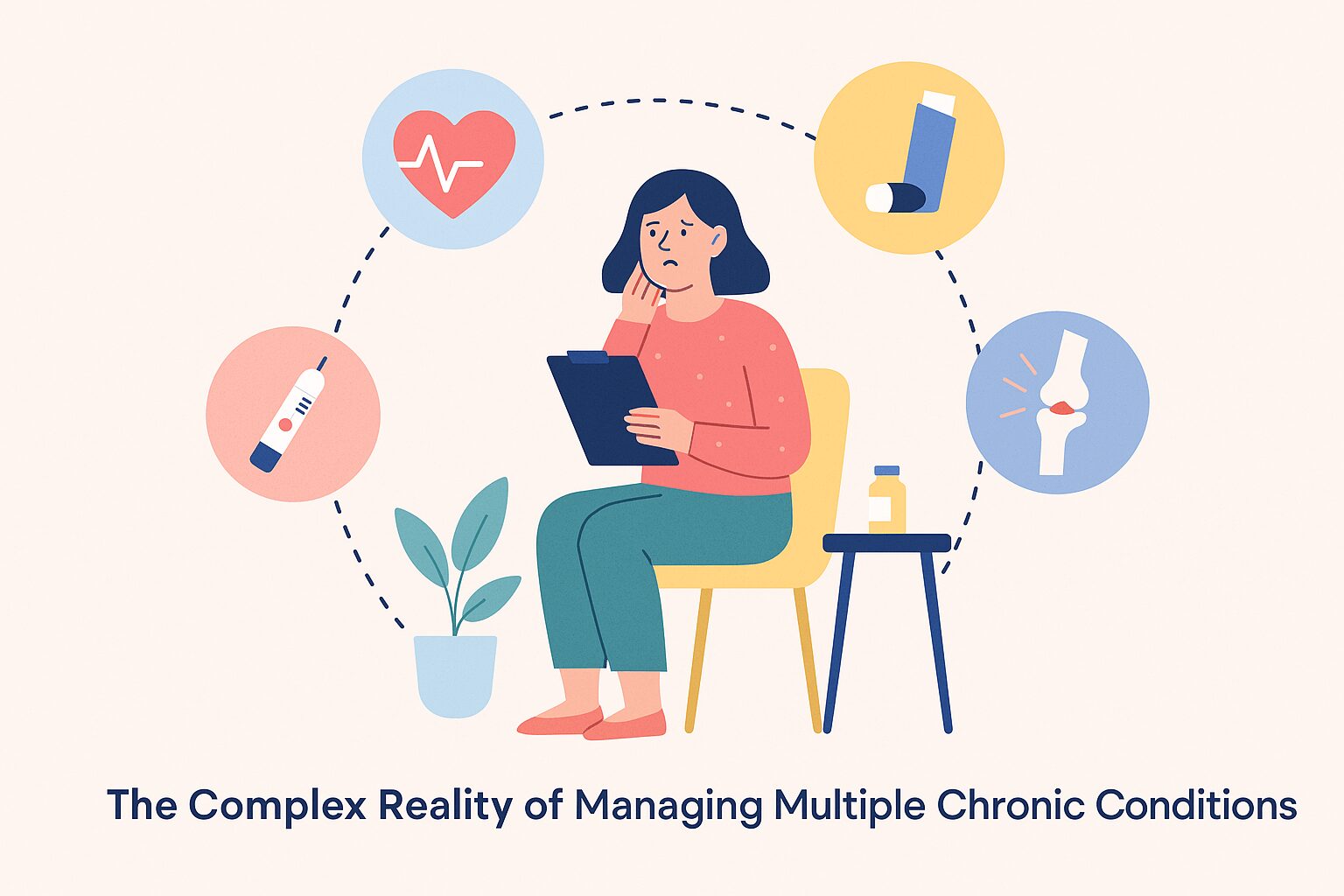
Managing multiple chronic conditions means keeping track of symptoms, treatments, and appointments for more than one illness. NICE defines multimorbidity as having two or more long-term health conditions. You may also hear the terms multiple chronic illnesses, multiple chronic diseases, or multiple long-term conditions. Examples include depression and rheumatoid arthritis, diabetes and heart disease, or anxiety and fibromyalgia. A symptom or treatment change can affect more than one part of your care.
Living with multiple chronic illnesses can mean repeating your medication list to different specialists and trying to remember which symptoms changed first. The practical difficulty is managing symptoms, treatments, and services that overlap. Keeping symptoms, medication records, and care plans together in CareClinic can help you prepare that information for appointments. Your healthcare team still needs to assess treatment conflicts and decide what to change.
Common Hurdles in Multimorbidity Management
When you have multiple health conditions, these problems can make day-to-day care harder:
- Symptom Overlap: Differentiating symptoms can be difficult. Is fatigue from depression, chronic fatigue syndrome, or a side effect of medication? A symptom record gives your clinician a timeline to review.
- Medication Complexity: Managing multiple prescriptions increases the risk of drug interactions, side effects, and adherence challenges. Keep doses and timings in one medication list, and ask your pharmacist or prescriber to check potential conflicts.
- Treatment Conflicts: A treatment beneficial for one condition might exacerbate another. For example, steroids used for autoimmune flares can affect blood sugar levels in diabetics.
- Identifying Triggers and Correlations: Understanding how lifestyle factors (diet, stress, sleep) or environmental elements (weather) impact different conditions simultaneously is hard without a consistent record.
- Communication Gaps: Coordinating care among multiple specialists (e.g., a cardiologist, rheumatologist, and psychiatrist) requires sharing the same symptom and treatment history.
- Increased Mental Load: The cognitive and emotional burden of managing complex health needs can be overwhelming, impacting mental health and adherence to care plans.
Keep a record that covers your conditions together, including your main concerns for each appointment. The examples below show what to track when mental and physical health conditions overlap.
[1]
Managing Co-Occurring Mental Health Conditions
Mental health conditions frequently coexist with chronic physical illnesses, creating a bi-directional impact where each can worsen the other. The National Institute of Mental Health notes that depression, for example, is significantly more prevalent among individuals with chronic diseases.
Depression
Impacting over 280 million people globally, depression often accompanies conditions like heart disease, diabetes, and autoimmune disorders. Its symptoms (fatigue, sleep disturbance, appetite changes) can overlap significantly with physical illnesses, making differentiation challenging. Record mood alongside physical symptoms so you can discuss the overlap with your clinician. You can:

- Log daily mood scores using a dedicated Mood Tracker, noting fluctuations.
- Record energy levels, sleep quality, and duration to see patterns potentially linked to depression or physical flare-ups.
- Monitor the effectiveness of antidepressants alongside treatments for other conditions, noting side effects.
- Use journaling features to document thoughts, feelings, and potential triggers, helping distinguish mental health patterns from physical symptoms.
Anxiety Disorders
Affecting roughly 275 million people worldwide, anxiety disorders often coexist with conditions like IBS, fibromyalgia, and respiratory illnesses. Physical symptoms of anxiety (racing heart, sweating, shortness of breath) can mimic symptoms of other conditions. Careful tracking helps by:
- Documenting specific physical symptoms of anxiety alongside other condition-specific symptoms.
- Reviewing correlation reports for possible links between anxiety spikes and situations, foods, or physical symptom flares. A correlation alone does not establish the cause.
- Keeping anti-anxiety medications in the same medication list as your other treatments so your pharmacist or prescriber can review potential interactions.
- Integrating tracking of relaxation exercises or therapy sessions into the overall health plan to monitor their impact.
ADHD
Attention-deficit/hyperactivity disorder, increasingly recognized in adults, can complicate the management of any chronic illness due to challenges with organization and executive function. A structured approach is key:
- Tracking medication timing and perceived efficacy for ADHD treatments.
- Monitoring focus levels, task completion, and energy throughout the day.
- Logging potential side effects of stimulant or non-stimulant medications, which might interact with other health issues.
- Using reminders and care plans to keep track of treatments for all conditions.
[2][3][4][5]
Managing Co-Occurring Autoimmune Diseases and Related Conditions
Autoimmune diseases involve the immune system attacking healthy tissues. It’s not uncommon for individuals to have more than one autoimmune condition, and these often coexist with mental health challenges or other chronic illnesses.
Rheumatoid Arthritis (RA)
Affecting over 1.3 million Americans, RA involves joint inflammation, pain, and fatigue. It frequently co-occurs with cardiovascular disease and depression. Useful details to record include:
- Detailed tracking of pain levels, specifying affected joints and severity.
- Logging joint stiffness duration (e.g., morning stiffness) and swelling observations.
- Using weather data integration to explore correlations between environmental factors and RA flares.
- Careful medication tracking for DMARDs, biologics, NSAIDs, and pain relievers, noting effectiveness and side effects in the context of other medications.
Multiple Sclerosis (MS)
Affecting nearly 1 million Americans, MS presents with diverse and unpredictable neurological symptoms. Co-occurring conditions often include depression, anxiety, and bladder dysfunction. Effective tracking includes:
- Monitoring fatigue (often a primary symptom), numbness, tingling, weakness, and cognitive changes (brain fog).
- Tracking sensitivity to heat or cold and its impact on overall symptoms.
- Logging physical therapy exercises, occupational therapy strategies, and overall activity levels.
- Developing adaptable care plans that can be adjusted during relapses or remissions, integrating treatments for all conditions.
Fibromyalgia
This condition, characterized by widespread musculoskeletal pain, fatigue, and sleep disturbances, affects about 4 million US adults. It often coexists with IBS, chronic fatigue syndrome, anxiety, and depression. Management benefits from:
- Using pain maps to track the location and intensity of pain across different body regions.
- Detailed sleep quality monitoring, as poor sleep significantly impacts fibromyalgia symptoms.
- Identifying and tracking potential flare triggers like stress levels, weather changes, or specific activities.
- Evaluating the effectiveness of various treatments, including medications, supplements, and non-pharmacological therapies (like gentle exercise or mindfulness).
[6][7][8][9]
Tools for Managing Multiple Chronic Conditions
For condition management, start with the tasks you need to keep track of: treatments, symptoms, measurements, and information to share with your care team.
Integrated Care Plans
Care plans keep treatments, appointments, and tracking for your multiple medical conditions in one place:
- You can structure plans by condition (e.g., one for Diabetes, one for Hypertension) or create integrated plans addressing related issues (e.g., Cardiovascular Health).
- Include all treatments: medications, physical therapy appointments, dietary changes, mental health exercises.
- Set reminders for medications, symptom checks, blood pressure readings, or blood glucose monitoring.
- Track progress across your conditions, viewing combined health data or focusing on specific condition trends.
A shared plan keeps your treatment schedules together so you do not have to reconstruct them from memory.
Medication Management
Managing polypharmacy means keeping track of multiple medications. Keep an up-to-date list for review with your pharmacist or prescribers. Medication management tasks include:
- Reviewing potential drug-drug interactions with your pharmacist or prescribers, including medications prescribed by different specialists.
- Recording prescribed doses and using reminders to help you keep track of scheduled doses. A reminder does not confirm whether you took a medication.
- Keeping a record of remaining medication and refill dates so you can arrange refills before you run out.
- Noting pill color or shape to help distinguish medications, while checking the name and label before taking them.
Symptom Correlation
Correlation reports can help you review patterns in recorded symptoms and treatments. They do not diagnose a condition or prove that one factor caused another. You can:
- See if a flare in one condition (e.g., RA joint pain) consistently precedes a change in another (e.g., worsened mood).
- Identify if starting a new medication for one condition correlates with new or worsened symptoms potentially related to another condition.
- Explore links between environmental factors (weather, pollen counts) and symptoms across multiple conditions.
- Analyze how lifestyle choices (diet, exercise, sleep) impact the collective symptom burden.
Bring possible connections to your healthcare team so they can review them alongside your clinical history.
Consistent Check-ins and Trend Analysis
Regular entries create a record of symptoms, measurements, and activities over time. You can use it for:
- Visualizing health trends through charts and logs, showing improvement or decline in specific areas.
- Identifying subtle changes that might indicate a worsening condition or a response to treatment.
- Preparing reports that show what happened between appointments.
Consistent check-ins give you more entries to compare over weeks and months. Note gaps in the record when you discuss a trend or possible connection.
Doctor Visit Reports
When you have multiple medical conditions, each specialist needs to know about relevant changes elsewhere in your care. Prepare for coordinated care by:
- Preparing shareable health summaries covering symptoms, medications, adherence data, and tracked measurements.
- Providing objective data visualizations (charts, graphs) that clearly demonstrate trends and patterns.
- Showing recorded doses and any missed or uncertain doses across your prescriptions.
- Presenting symptom patterns that might suggest interactions between conditions, prompting collaborative investigation.
Share the same record with your care team and ask who will coordinate follow-up when advice or treatments conflict.
Example: Managing Diabetes and Anxiety Together
Consider someone managing both Type 2 Diabetes and Generalized Anxiety Disorder. The interplay is significant: stress from anxiety can raise blood sugar levels, while blood sugar fluctuations can worsen anxiety symptoms. Diabetes management itself can be a source of anxiety.
Tracking both conditions in one record can help you:
- Monitor blood glucose alongside anxiety levels: Use correlation features to see if high anxiety scores precede blood sugar spikes, or vice versa.
- Track medication side effects together: Log how diabetes medication affects mood or energy, and how anxiety medication might impact appetite or sleep (both relevant to diabetes).
- Incorporate behavioral strategies: Track adherence to both dietary guidelines (diabetes) and mindfulness exercises (anxiety) within the same care plan, seeing their combined impact.
- Prepare for appointments: Generate a single report for both their endocrinologist and therapist, showing blood sugar trends, anxiety scores, medication adherence, and lifestyle factors, to support coordinated care.
[10]
Getting Started: A Structured Approach to Multi-Condition Tracking
Start with the information you already have:
- Set Up Your Foundation: Create separate care plans for each condition or a combined plan based on how you and your doctors manage them.
- Log Your Treatments: Add all medications, supplements, therapies (physical, occupational, psychological), and planned lifestyle interventions (diet, exercise).
- Customize Tracking: Configure specific symptom trackers relevant to each condition (e.g., joint pain for RA, blood sugar for diabetes, mood for depression).
- Include Measurements: Add trackers for objective data like blood pressure, weight, peak flow, sleep duration, or blood glucose levels.
- Establish Routine Check-ins: Commit to regular (ideally daily) brief check-ins to log symptoms, adherence, and activities. Consistency builds valuable data.
- Analyze Your Data: Regularly review the generated charts, logs, and correlation reports to understand trends and discuss insights with your healthcare team.
Keeping Your Care Record Useful
Managing multiple chronic conditions takes more than a record, but a record can make the next appointment easier to prepare for. If you have multiple concerns, start with your current treatments and the symptoms you most need to discuss. You can add other measurements as you and your healthcare team decide what is useful.
Keep your medication list current. Bring symptom changes, possible side effects, and conflicting advice to your care team. The aim is to give each clinician a usable record of what happened between visits, including what you could not track.
If you need mental health support while living with multiple chronic conditions, include those concerns in the same appointment plan. Ask your clinician what support is available and how it can fit with care for your physical health.
References
- “Trends in the Prevalence of Cardiometabolic Multimorbidity in the United States, 1999-2018”. https://pubmed.ncbi.nlm.nih.gov/35457593/
- “Understanding the Link Between Chronic Disease and Depression – National Institute of Mental Health (NIMH)”. https://www.nimh.nih.gov/health/publications/chronic-illness-mental-health
- “Anxiety disorder”. https://en.wikipedia.org/wiki/Anxiety_disorder
- “The Big Question: what is driving the global mental health crisis?”. https://www.ft.com/content/4b75300a-12ca-42b7-a07a-4519435ea4b8
- “Global mental health crisis hits workplaces”. https://www.ft.com/content/81eedab5-3dd0-41cb-802b-2390f9aa6f4e
- “Over Half of People with Autoimmune Diseases Have a Mental Illness”. https://www.health.com/autoimmune-disease-mental-illness-7569310
- “Autoimmune diseases co-occurring within individuals and within families: a systematic review”. https://pubmed.ncbi.nlm.nih.gov/16477262/
- “Fibromyalgia”. https://en.wikipedia.org/wiki/Fibromyalgia
- “Management of multiple sclerosis”. https://en.wikipedia.org/wiki/Management_of_multiple_sclerosis
- “Diabetes and Mental Health | Diabetes | CDC”. https://www.cdc.gov/diabetes/living-with/mental-health.html
