


A personal hygiene checklist breaks washing, brushing and getting dressed into small steps you tick off one at a time. It is for teens taking over their own routine, adults with a disability, brain injury or memory problems, anyone in a low or unwell stretch, and the caregivers who support them.
Keep the steps that fit, cross out the rest and add your own. Tick each step on the day it happens. After two weeks the grid shows which steps are steady and which ones keep slipping, so you know where a reminder or a hand would help.
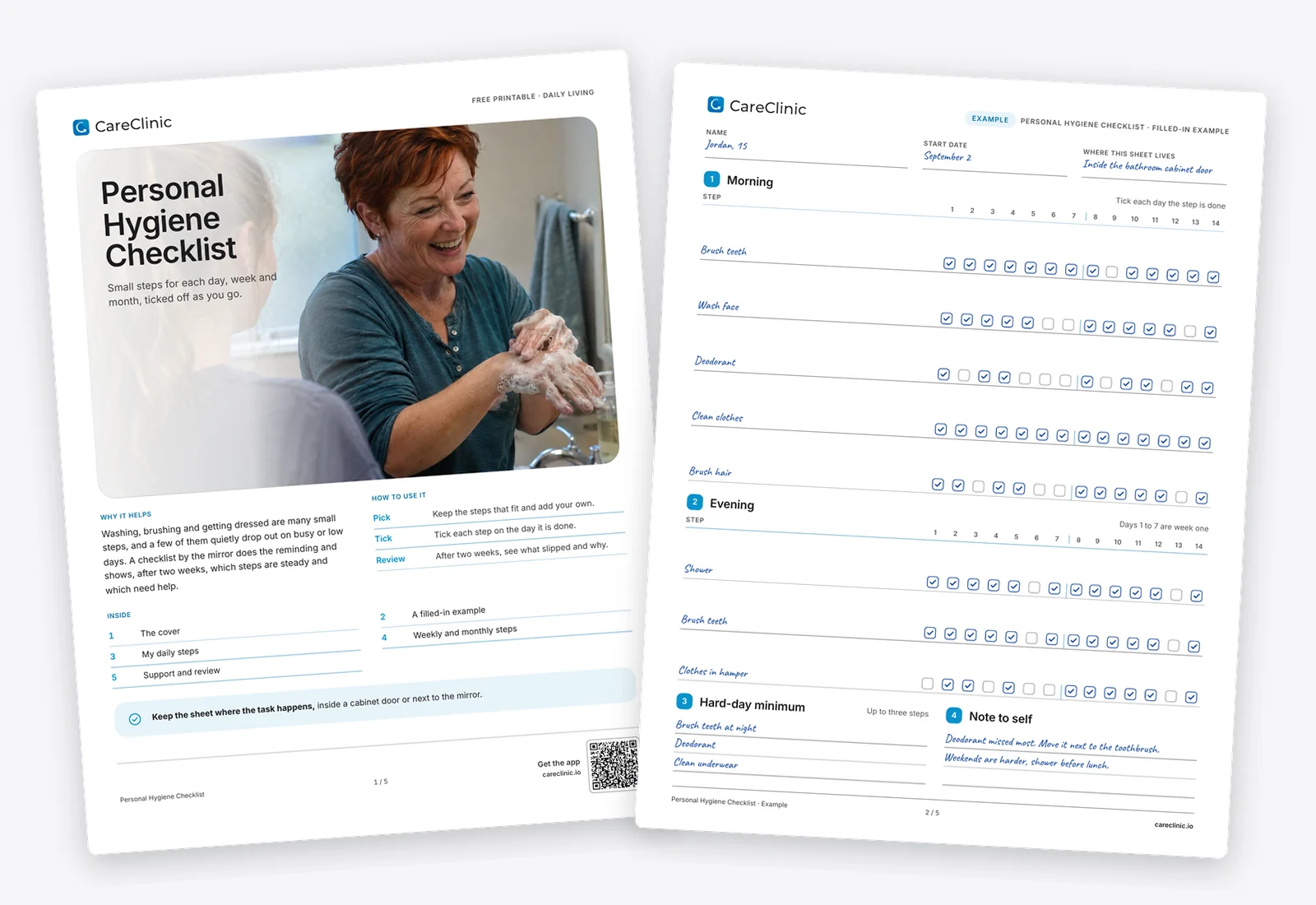
Download the Personal Hygiene Checklist
- Fill it in on your phone or computer, or print it
- US Letter and A4
- Includes a filled example
How it helps
Small steps
Each task is broken into parts, so a shower or getting dressed feels doable even on a hard day.
Fewer reminders
The sheet does the prompting, which protects privacy and avoids the same daily argument.
Two weeks at a glance
The tick grid on the personal hygiene checklist shows which steps hold and which slip, and on which days.
How to use it
- Pick the steps. Keep the daily, weekly and monthly steps that fit this person and add any that are missing.
- Choose a hard-day minimum. Pick up to three steps you can still manage when the day is rough, such as brushing teeth at night.
- Tick as you go. Keep the sheet in the bathroom and tick each step on the day it is done.
- Look back after two weeks. Use the review page to note what slipped, what is easy now and where help is wanted.
What is inside
- Page 1, the coverHow to use the personal hygiene checklist and what is inside.
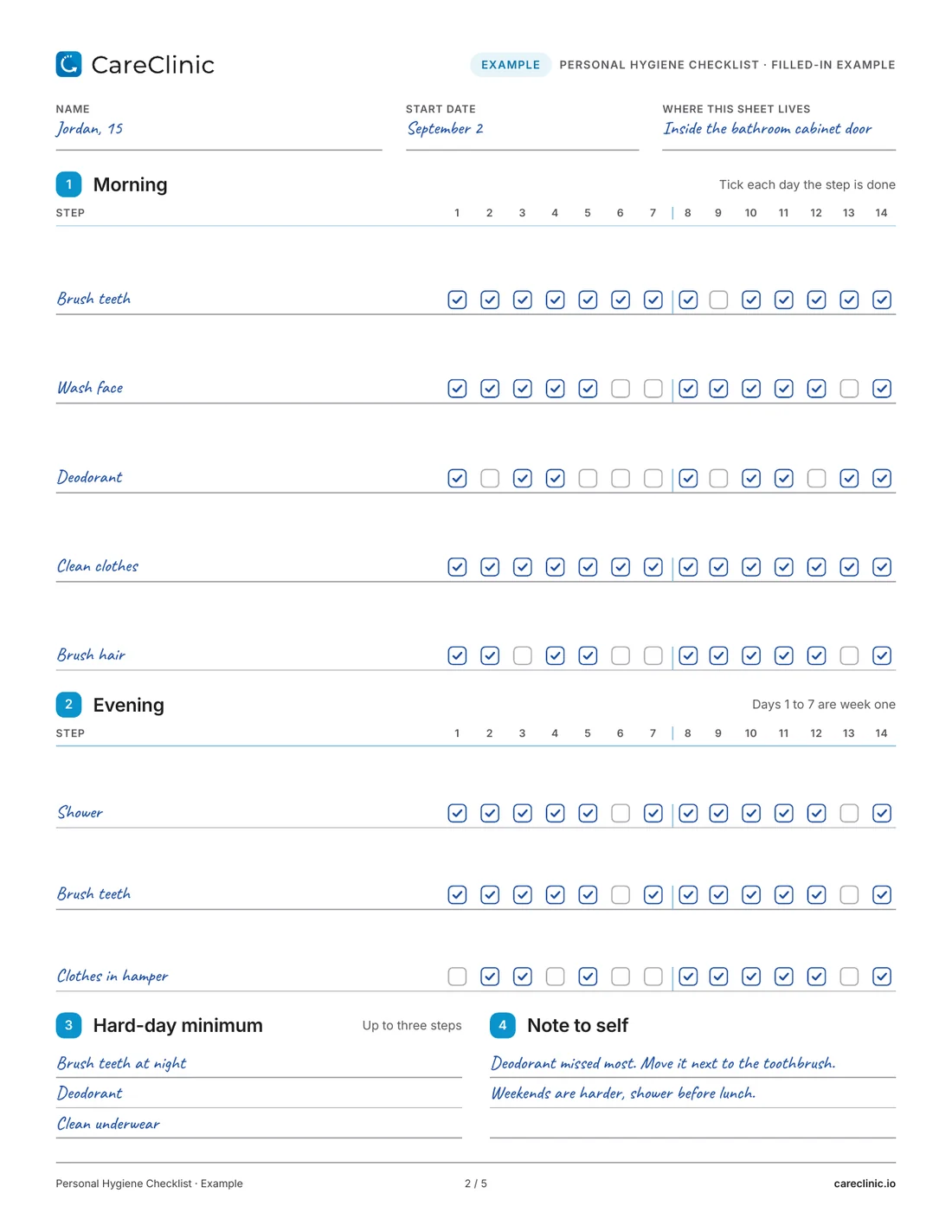
- Page 2, a filled-in exampleJordan's two weeks of morning and evening steps, with a hard-day minimum and a note.
- Page 3, my daily stepsMorning and evening steps with a 14 day tick grid and room for your own.
- Page 4, weekly and monthly stepsHair, nails, sheets, towels, laundry, toothbrush checks and supplies to buy.
- Page 5, support and reviewWhat you do alone, where help is wanted, how you like reminders and equipment that might help.
See a filled example
The example belongs to Jordan, 15. Jordan brushed his teeth on 13 of 14 mornings but used deodorant only 8 times, so his note says to move the deodorant next to the toothbrush. Weekends were harder, so the note also says to shower before lunch. His hard-day minimum is brushing teeth at night, deodorant and clean underwear.
 Open the full PDF
What goes on a daily hygiene routine
Most daily lists cover the toilet and handwashing, brushing teeth, washing the face, deodorant, hair, shaving or skin care, and clean underwear and clothes. Evening adds a shower or bath, brushing again and cleaning between the teeth. Dentists suggest brushing twice a day and flossing, or using another tool between the teeth, every day.
Washing hands well takes about 20 seconds with soap, so a short song helps children and teens get the timing right. The blank lines are for steps that matter to this person, such as hearing aids, a mouthguard or a skin cream.
Weekly and monthly steps
Hair washing depends on hair type and activity, so the weekly page asks how often rather than setting a number. Sheets, towels, laundry and fingernails sit there too. The monthly list covers toenails, the toothbrush and the hairbrush, which are easy to forget because they come around so rarely.
Hard days and what slips
Illness, pain, grief or low mood can make the full list feel out of reach. Pick up to three steps that still count on those days and write them in the hard-day minimum box. Doing those three is a good day on paper, too.
When the same step keeps slipping, look at when. If weekends are the gap, tie the step to something that happens every day. If one step is skipped every time, ask why. Pain, fear of falling in the shower or a sensory issue can all look the same on a grid.
Tips that make it work
- Put the personal hygiene checklist where the task happens, inside a cabinet door or next to the mirror.
- List steps in the order they are done, so one step cues the next.
- Keep supplies in reach before you ask for a step to be done.
- Let the person choose the order and the time where possible. Choice makes daily routines their own, and the CareClinic app can send a reminder at that time.
Bringing it to your doctor
Changes in self care can be an early sign of low mood, pain, memory problems or a medicine side effect. Bring two weeks of the personal hygiene checklist to the next appointment, especially if steps that used to be easy are now missed. Contact a doctor sooner if someone suddenly stops washing or dressing, seems confused, or has skin sores that are not healing.
Questions
What goes on a personal hygiene checklist?
Start with daily steps such as brushing teeth, washing face and hands, deodorant and clean clothes. Add weekly steps such as hair washing, nails, bedding and laundry, and a few monthly ones. Then remove anything that does not fit the person.
How do you teach personal hygiene to a teenager?
Show each step once, then let them do it with the list in view. Talk about why in plain terms, keep supplies in reach, and notice effort. A checklist turns reminders into something they can check themselves.
How can a checklist help an adult with a disability?
It gives a predictable order and a visual cue, which helps with memory and planning problems. Caregivers can see which steps need hands on help and which ones the person now does alone.
How often should you shower?
It depends on age, skin, activity and health, so there is no single answer. Many people shower daily, while some older adults with dry skin do better with less often. Write what works for this person on the weekly page.
Is there a free personal hygiene checklist PDF?
Yes. This personal hygiene checklist is a free printable PDF in US Letter and A4, with a filled example, a two week grid, weekly and monthly steps and a review page.
More free worksheets
References
- Brushing Your Teeth. MouthHealthy, American Dental Association. https://www.mouthhealthy.org/all-topics-a-z/brushing-your-teeth
- How to wash your hands. NHS. https://www.nhs.uk/live-well/best-way-to-wash-your-hands/