


This energy tracker printable is for anyone living with fatigue who wants to see what each day costs and pace themselves before a crash. A traffic light for each part of the day shows which activities are easy, medium or hard for you.
With fatigue, a busy day often costs more a day or two later. For people with ME/CFS, symptoms that get worse after physical, mental or emotional effort are called post-exertional malaise. Over a few weeks, these pages show what tends to come before a crash, so you can plan rest before you need it.
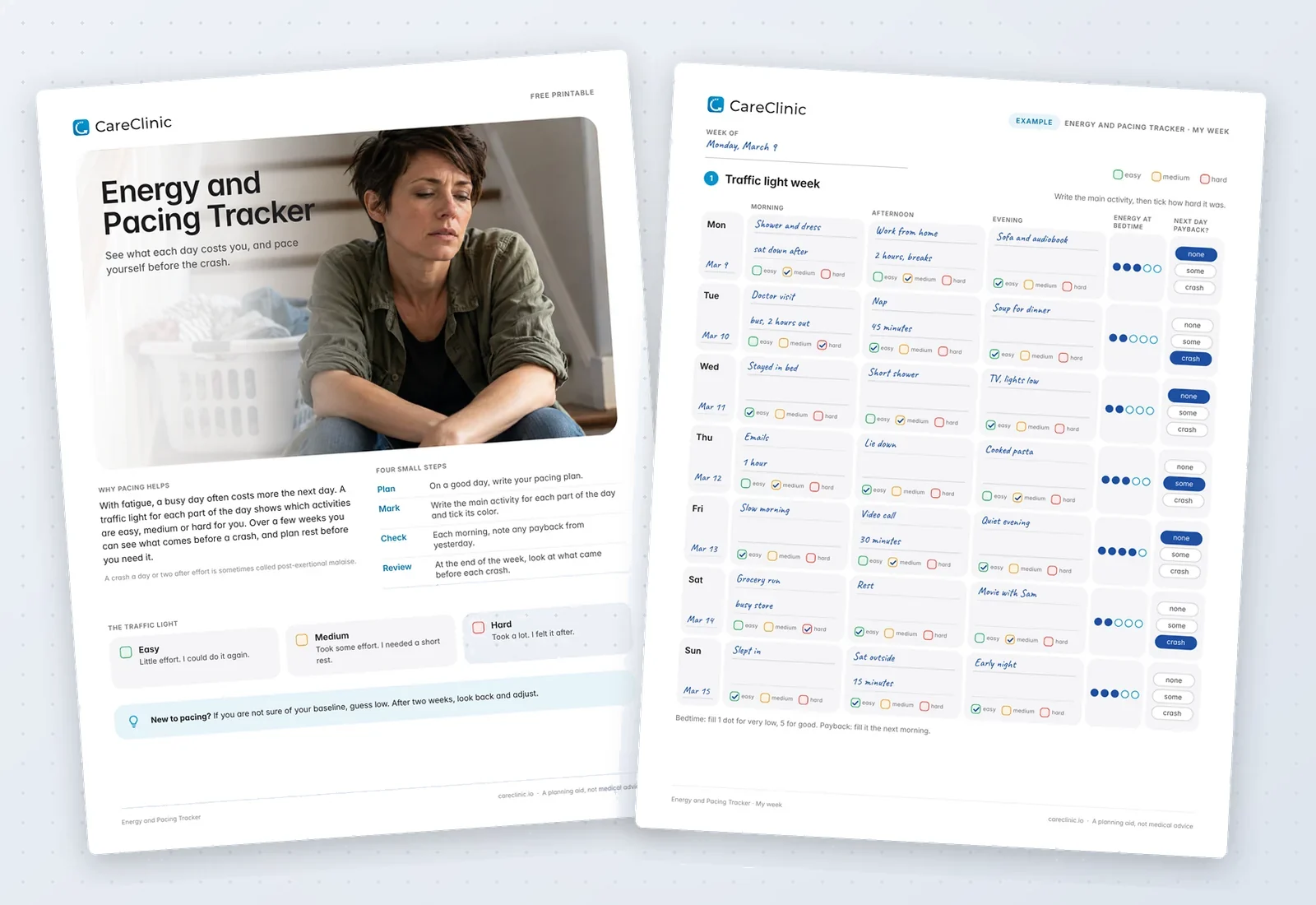
Download the Energy Tracker Printable
- Fill it in on your phone or computer, or print it
- US Letter and A4
- Includes a filled example
US Letter suits the US and Canada. A4 suits most other countries.
How it helps
See the cost of each activity
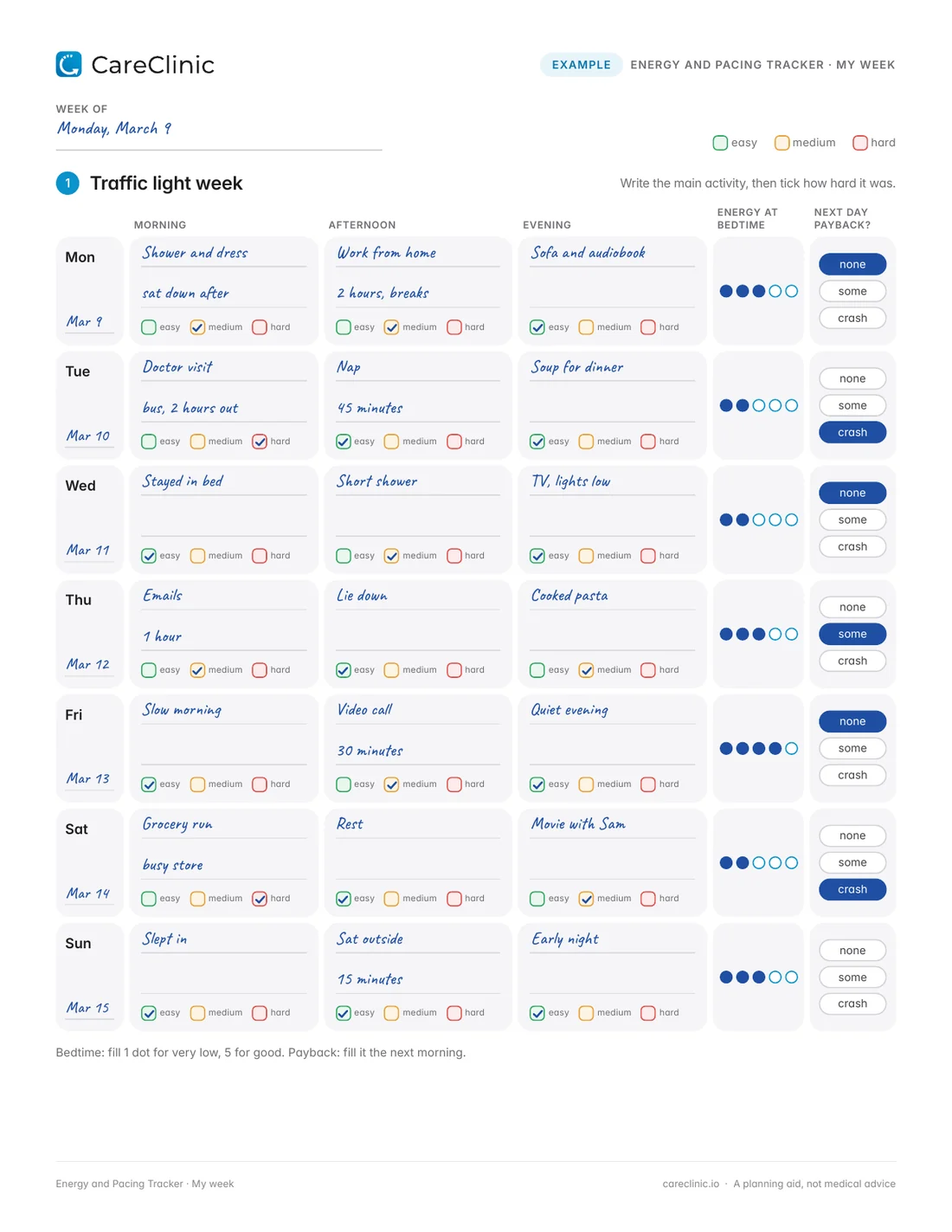
Write the main activity for the morning, afternoon and evening, then tick whether it was easy, medium or hard.
Catch the payback
Each morning, mark whether the day before left you with no payback, some or a crash.
Plan rest on purpose
Your pacing plan sets a baseline, early warning signs, a stop rule and the rests you will schedule.
How to use it
- Plan On a good day, write your pacing plan.
- Mark Write the main activity for each part of the day and tick its color. At bedtime, fill 1 to 5 dots for the energy you have left.
- Check Each morning, note any payback from yesterday.
- Review At the end of the week, count your colors and look at what came before each crash.
What is inside
- My weekA filled example and four blank weeks, with a traffic light for each part of the day, bedtime energy and next day payback.
- My pacing planYour baseline, early warning signs, stop rule and the rests you will schedule.
- Weekly reviewYour week in colors, what came before each crash, and whether your baseline is still right, ending with a card for your next appointment.
See a filled example
The example week starts Monday, March 9. On Tuesday, a doctor visit by bus, 2 hours out, is marked hard, the payback box says crash, and Wednesday is spent in bed. Saturday's grocery run in a busy store is also hard and also ends in a crash. Friday, with a slow morning and a 30 minute video call, ends with the best bedtime energy of the week, 4 dots out of 5.
 Open the full PDF
Tips that make it work
- If you are not sure of your baseline, guess low. After two weeks, look back and adjust.
- Fill in My pacing plan on a good day, when you can think clearly, and keep it with your week pages.
- Schedule rests before you feel you need them. A rest you planned counts as part of the day.
- In your weekly review, look closely at the day or two before each crash. Over time it can show which activities to split up or move.
Bringing it to your doctor
Bring your weekly review pages to appointments. A month of traffic lights and crash days shows your doctor or care team your pattern much faster than memory can. Use the For my next appointment card for questions about pacing or treatment. Contact your doctor if your fatigue is new, keeps getting worse, or stops you doing everyday things.
Questions
How do I track my energy levels?
Write the main activity for each part of the day and mark whether it was easy, medium or hard. At bedtime, fill 1 to 5 dots for the energy you have left. The next morning, note any payback. After a week, this simple energy tracker shows your pattern.
What is post-exertional malaise?
It is when symptoms get worse after physical, mental or emotional effort. People with ME/CFS often notice it a day or two later, and it can last for days or weeks. The Next day payback column on this sheet is there to catch it.
What is pacing for chronic fatigue?
Pacing means staying active without overdoing it, so you use your energy in a way that does not set off a crash. The NHS describes a similar approach called energy management, which can include keeping a diary of your daily activities. Pacing for chronic fatigue on this sheet means planned rests and a stop rule for when early warning signs appear.
How do you start pacing with a chronic illness?
Start by finding your baseline, the amount you can do on a normal day without a crash. Then plan each day to stay within it, with rests scheduled in. My pacing plan walks you through this, so the sheet also works as an energy tracker for chronic illness.
Is this energy tracker printable free?
Yes. The Energy and Pacing Tracker is free in A4 and US Letter sizes. It also works as a fatigue tracker or fatigue diary template, and you can fill it in on your phone or print it.
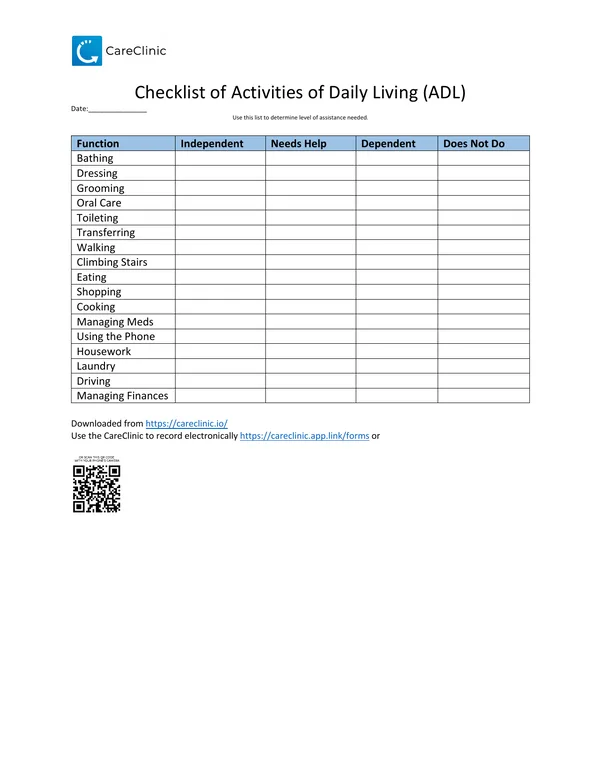
More free worksheets


References
- Mayo Clinic. Myalgic encephalomyelitis/chronic fatigue syndrome (ME/CFS): Diagnosis and treatment. https://www.mayoclinic.org/diseases-conditions/chronic-fatigue-syndrome/diagnosis-treatment/drc-20360510
- NHS. Myalgic encephalomyelitis or chronic fatigue syndrome (ME/CFS): Treatment. https://www.nhs.uk/conditions/chronic-fatigue-syndrome-cfs/treatment/