


A mindful eating worksheet guides you through one snack or meal slowly, noticing how the food looks, smells, feels, sounds and tastes, and how your hunger changes as you eat. It is for anyone who eats in a rush or in front of a screen, and for people with conditions such as diabetes, IBS or reflux, where pace and portions can matter.
You do not need to change what you eat. The practice is about how you eat and what you notice. Start with one guided practice, then use the week log to slow down one meal a day.
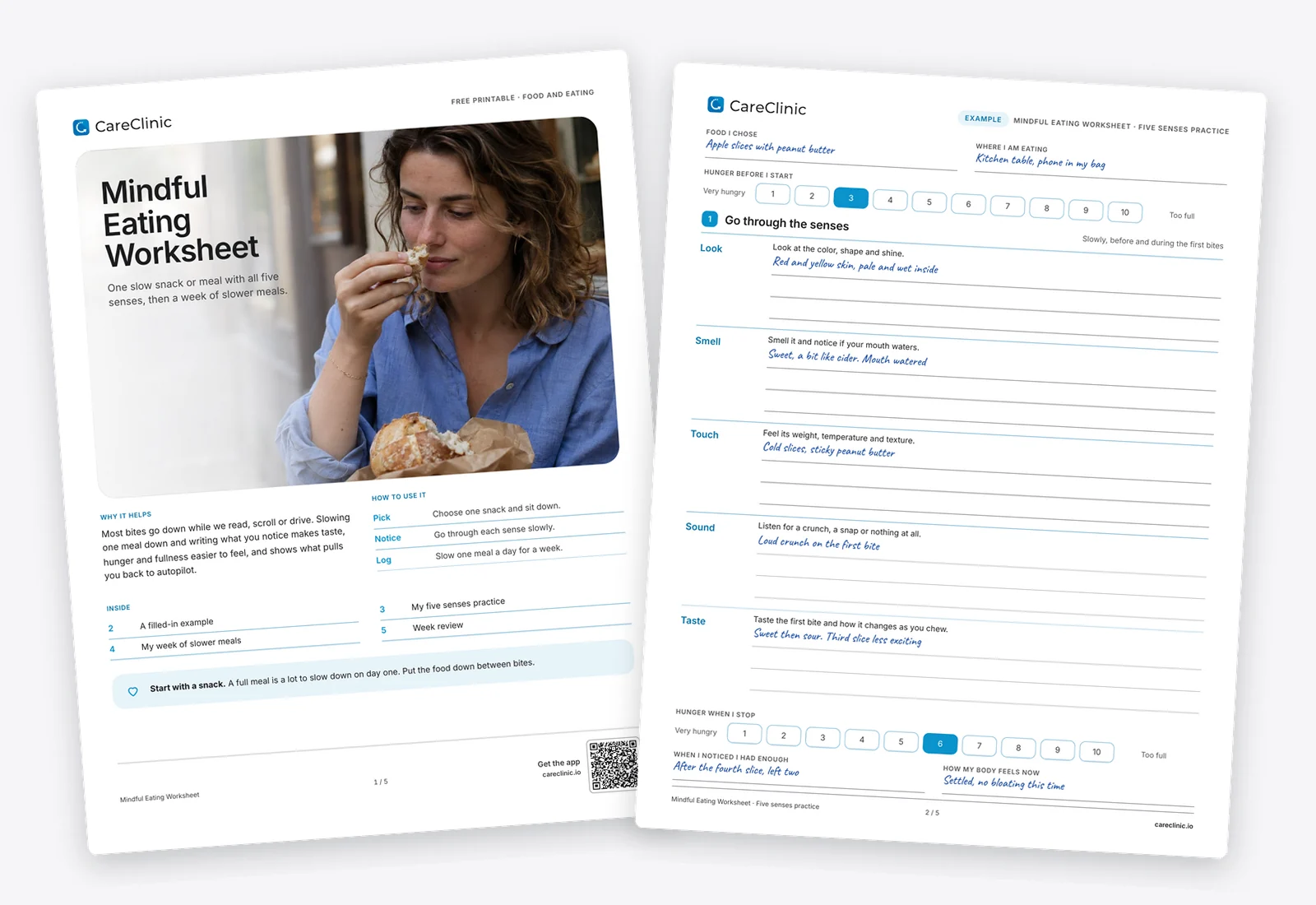
Download the Mindful Eating Worksheet
- Fill it in on your phone or computer, or print it
- US Letter and A4
- Includes a filled example
How it helps
Notice more
The mindful eating worksheet gives each sense its own prompt and lines, which slows you down without a timer.
Less autopilot
Writing what you notice makes it harder to finish a plate without tasting it.
See your patterns
The week log shows which meals you slowed down and what got in the way.
How to use it
- Pick one food. Choose a snack you can eat sitting down, with your phone out of reach.
- Rate your hunger. Circle a number from 1, very hungry, to 10, too full.
- Go through the senses. Write a few words for each sense before and during the first bites.
- Log a week. Slow down one meal a day and fill in one line for it on the week log.
What is inside
- Page 1, the coverHow to use it and what is inside.
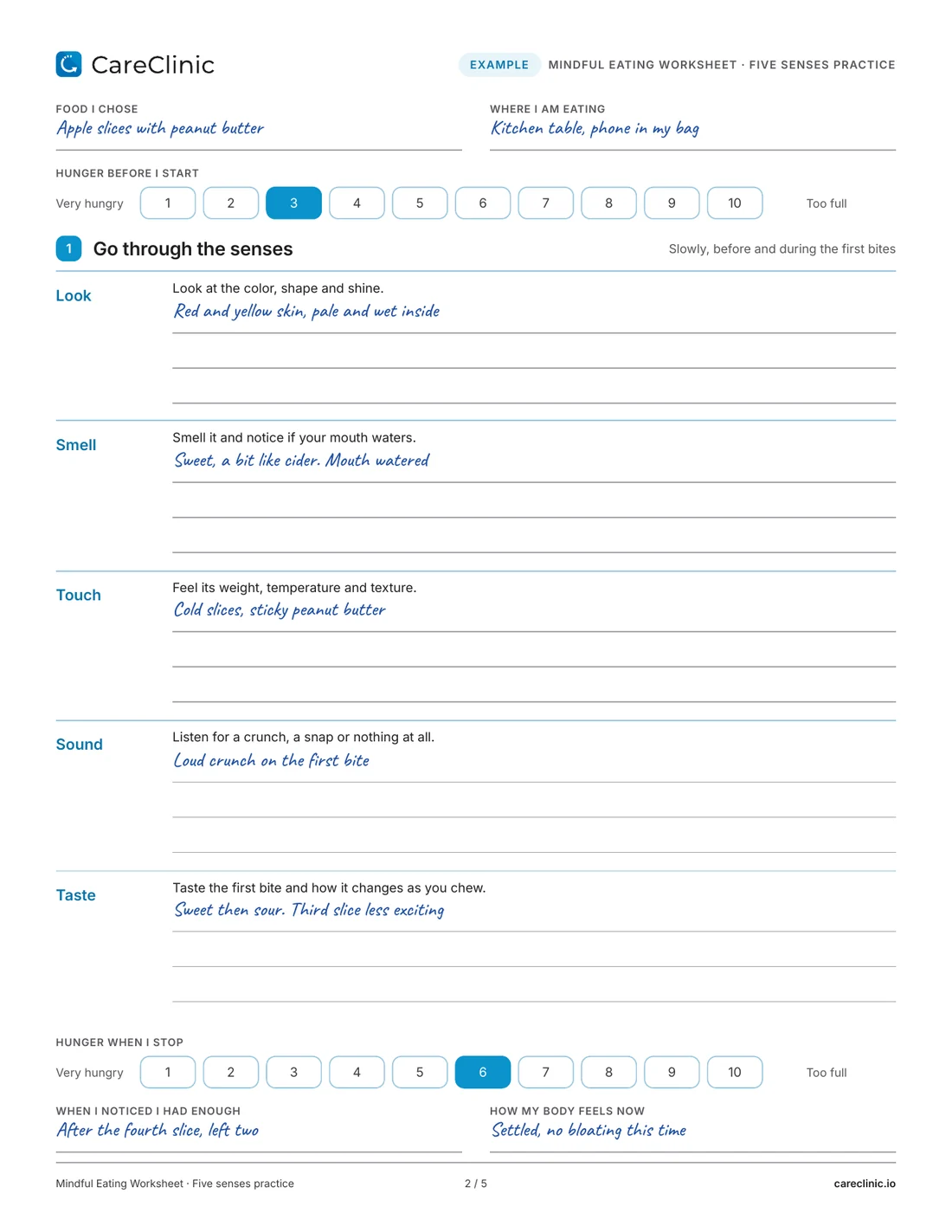
- Page 2, a filled-in exampleA five senses practice with apple slices and peanut butter.
- Page 3, my five senses practiceFood, place, hunger before and after, and a prompt for each sense.
- Page 4, my week of slower mealsOne row a day for meal, minutes, distractions, hunger and how you felt.
- Page 5, week reviewWhat helped, what got in the way and notes for your next appointment.
See a filled example
In the example, someone eats apple slices with peanut butter at the kitchen table with the phone in a bag. Hunger starts at 3. The apple smells a bit like cider, the first bite crunches loudly, and by the third slice the taste feels less exciting. Hunger reaches 6, so they stop with two slices left and note that their stomach feels settled.
 Open the full PDF
What is mindful eating
Mindful eating means paying full attention to food and to your body while you eat, without judging yourself. It grew out of mindfulness practice, where you notice what is happening right now instead of reacting on autopilot.
In daily life it looks simple. You eat without a screen, notice colors, smells and textures, take smaller bites, and check in with hunger and fullness along the way. It is not a diet, and no food is good or bad on this sheet.
The five senses practice
Choose something small, such as a few slices of fruit, a piece of bread or a square of chocolate. Sit down with the mindful eating worksheet and go through each sense in turn before you swallow the first bite. Your mind will wander to your phone or your to do list. Noticing that and coming back is part of the practice.
The prompts on the sheet
- Look at the color, shape and shine.
- Smell it and notice if your mouth waters.
- Feel its weight, temperature and texture.
- Listen for a crunch, a snap or nothing at all.
- Taste the first bite and how it changes as you chew.
Hunger and fullness
The sheet uses a simple scale from 1, very hungry, to 10, too full. Circle a number before you start and again when you stop. Over a week you may see that you start meals very hungry, or that you keep eating past the point where food tastes interesting.
Eating slowly gives your body time to send fullness signals, so you are more likely to notice when you have had enough. The mindful eating worksheet keeps both numbers side by side, so the change is easy to see.
Using it with kids or a class
Teachers and parents can use the mindful eating worksheet with older children as a short class activity. Pick one small food everyone can eat safely, check for allergies first, and have each child write one word per sense. Skip the hunger scale for younger children and talk about it instead.
Tips that make it work
- Try the mindful eating worksheet with a snack first. A full meal is a lot to slow down for on day one.
- Put your fork or food down between bites for the first few minutes.
- Turn the screen face down, or eat somewhere other than your desk or car.
- If you also keep a food diary, add one line about pace and distractions to each entry.
Bringing it to your doctor
If you live with diabetes, IBS, reflux or another condition affected by eating, bring a week of logs to your dietitian or doctor. Mention pain, trouble swallowing, reflux or feeling full very fast, since these can have medical causes. A mindful eating worksheet is not right for everyone at every stage. Anyone getting help for an eating disorder should check with their treatment team first. If food thoughts crowd out the rest of your day, or eating feels like something you cannot stop, speak with your doctor or an eating disorder specialist.
Questions
What is mindful eating?
It means paying full attention to food and to your body while you eat, without judging. You notice taste, texture, hunger and fullness instead of eating on autopilot.
What are the benefits of mindful eating?
Eating slowly and with attention can help you notice fullness and enjoy food more. In studies, people who ate more slowly tended to feel full sooner and eat less.
How do you start mindful eating?
Begin with one snack a day, eaten sitting down with no screen. A mindful eating worksheet gives you prompts to look, smell and taste before you swallow, and a reminder to pause between bites.
Does mindful eating help with weight loss?
Weight change is not the aim, and results vary. Slower eating with fewer distractions can help you notice fullness, which some people find useful alongside other changes.
Can mindful eating help with diabetes?
It can help with noticing hunger and slowing down, which some people find useful. Keep following the medicines and meal plan from your care team alongside it.
Is this mindful eating worksheet free?
Yes. The mindful eating worksheet is a free printable PDF in US Letter and A4 with a filled example and a week log. Fill it in on your phone or computer, or print it.
More free worksheets
References
- Mindful Eating. The Nutrition Source, Harvard T.H. Chan School of Public Health. https://nutritionsource.hsph.harvard.edu/mindful-eating/