

An eczema flare up is a period when your skin becomes itchier, drier, redder or more inflamed than usual. Atopic eczema tends to come and go, with flare ups followed by calmer stretches. Knowing what tends to come before your flares is one of the most practical ways to have fewer of them.
This guide covers what an eczema flare up looks like, what causes flare ups, the triggers dermatologists and the NHS name most often, how to calm a flare and prevent the next one, and how to keep a simple record that shows which triggers matter for you.
What is an eczema flare up?
Atopic eczema, also called atopic dermatitis, makes skin itchy and dry. It can look cracked, crusty, scaly or thickened. Depending on your skin tone, affected areas may look red, purple, grey or white, or lighter or darker than the skin around them. The NHS describes the course of eczema as times when symptoms get worse, called flare ups, and times when they are better. [1]
During a flare up, itching usually comes first. Scratching damages the skin further, which can make the itch worse and lead to broken or weeping patches. Itch at night can also disturb sleep, so a flare often affects how you feel the next day.
What does an eczema flare up look like?
Atopic eczema is common on the elbows, knees and hands, and in babies and toddlers it often appears on the face. During a flare, affected skin may become itchier, drier, cracked, crusty, scaly or thickened. It can blister or bleed. On lighter skin a flare often looks red, while on brown and black skin it may look purple, grey or darker than the surrounding skin, or sometimes lighter. [1]

Because color changes are harder to see on darker skin, itch, dryness and thickening are often the more reliable signs that a flare is starting. A photo of the same area taken every few days makes slow changes easier to judge.
What causes eczema flare ups?
Eczema skin has a weaker barrier, so everyday exposures can set off a flare. The NHS lists these as things that can make eczema worse: [1]
- Irritants and allergens: soap, washing detergent, some fabrics, pets, pollen, house dust mites and certain foods.
- Heat and temperature changes: being hot can make eczema itchier.
- Skin infections: such as a staph infection.
- Stress.
- Hormonal changes: such as during pregnancy.
The American Academy of Dermatology (AAD) adds a few specific points. Cold weather dries the skin, which can make atopic dermatitis flare, and sweat from overheating can also trigger a flare up. Fragrance is a common trigger in skin care products. [2]
Skin care products and fragrance
The AAD recommends products labeled "fragrance free" and advises against products labeled "unscented", because unscented products may contain fragrance that has been masked. Other ingredients can also cause a flare. To test a new product, apply a small amount to the inside of your arm every day for 7 to 10 days, and use it only if your skin stays clear. [2]
Clothing and laundry
Dermatologists suggest loose, 100% cotton clothing, never wearing wool next to the skin, and washing new clothes before you wear them. Use laundry detergent that is fragrance free and dye free. [2] Our guide to the best laundry detergent for eczema covers what to look for on the label.
Food triggers for eczema
Certain foods appear on the NHS list, but food is a trigger for some people only. [1] Cutting out food groups without a clear reason can affect nutrition, especially for children. If you suspect a food, keep a record and talk to your doctor before you remove it. A food and symptom diary helps you see whether a flare reliably follows a particular food.
How long does an eczema flare up last?
There is no fixed length. A mild flare may settle within a few days once you remove the trigger and keep up with moisturiser and prescribed treatment. A stronger flare can last several weeks. Recording the start and end of each flare shows your own pattern, and tells your doctor whether a treatment is shortening flares over time.
Eczema flare up on the face, hands and neck
Where a flare appears can hint at what set it off, although it is not proof on its own.
Face
Face eczema is especially common in babies and toddlers. [1] In adults, new skin care and makeup are worth checking first, because fragrance and other ingredients can trigger a flare. Choose products labeled fragrance free and test each new product on the inside of your arm for 7 to 10 days before using it on your face. [2]
Hands
Hands are one of the most common places for eczema. [1] Frequent washing, soap and household products are common irritants. The NHS suggests washing with an emollient instead of soap and applying moisturiser often, at least twice a day. [1]
Neck
Collars, tags, wool and some fabrics rub the skin on the neck. Dermatologists recommend loose 100% cotton clothing, removing tags and never wearing wool next to the skin. [2] Fragrance in perfume or hair products is another common culprit.
How to calm an eczema flare up
There is no cure for atopic eczema, but treatment can control a flare. The main treatments are emollients, which are moisturizing creams, lotions, ointments and gels you apply and wash with, and topical corticosteroids, which are steroid creams, lotions or gels. A pharmacist can help if you have small areas that are dry and slightly itchy. For more severe eczema, see a GP or doctor, who can prescribe treatment or refer you to a dermatologist. [1]
Day to day, the NHS recommends these steps: [1]
- Apply emollients as often as possible, at least twice a day, and keep going even when your skin improves.
- Wash with an emollient instead of soap.
- Keep cool, because being hot can make eczema itchier.
- Keep nails short, and gently rub an itchy area with your finger instead of scratching.
- Do not share your emollients with anyone else.
The AAD adds that a short 5 to 10 minute bath or shower in warm water, followed by moisturizer while the skin is still damp, helps lock in moisture. [2]
Why does eczema flare up at night?
Many people notice itch most when they are in bed. Warmth is one reason, since heat makes eczema itchier, and scratching during sleep can damage the skin before you notice. [1] Keep the bedroom cool, use cotton sheets and nightwear, apply emollient before bed and keep nails short. For babies, the NHS suggests anti-scratch mittens. [1] If itch regularly wakes you, mention it to your doctor, because poor sleep is a sign your treatment plan may need to change.
How to prevent eczema flare ups
Prevention is mostly about consistency. Keep moisturizing on good days, not only during a flare. [1] Avoid the triggers you have already identified, test new products before using them widely, choose fragrance free and dye free laundry detergent, and wash new clothes before wearing them. [2] Plan for known pressure points such as hot weather, exercise or exam and work deadlines.
Eczema flare ups in babies and young children
Atopic eczema is most common in young children and often appears on the face in babies and toddlers. Many children find their symptoms improve as they get older. [1] Keep your baby's nails short, consider anti-scratch mittens and use emollients regularly. [1] Talk to your doctor or health visitor before removing any foods from your child's diet, and get urgent advice if the skin looks infected or your child has a high temperature or seems unwell. [1]
How to find your eczema triggers
Triggers differ from person to person, and several often act together. Hot weather plus a stressful week plus a new body wash can be enough, when none of them alone would cause a flare. That is why a short daily record works better than trying to remember the week before a flare.
Track these details each day for a few weeks:
- Itch and sleep: rate itch on a simple scale and note whether itch woke you up.
- Where it flared: note the areas, such as elbows, hands or face.
- Weather: note hot, cold or dry days and heavy sweating.
- Products and fabrics: record new soaps, creams, detergents or clothing.
- Stress, illness and hormones: mark busy weeks, colds and menstrual cycle days if relevant.
- Treatment: record when you moisturised and used prescribed creams.
After a few weeks, look at the days before each flare. If the same factor keeps appearing, discuss it with your doctor or dermatologist and agree on a plan to test it.
Track eczema flares with CareClinic
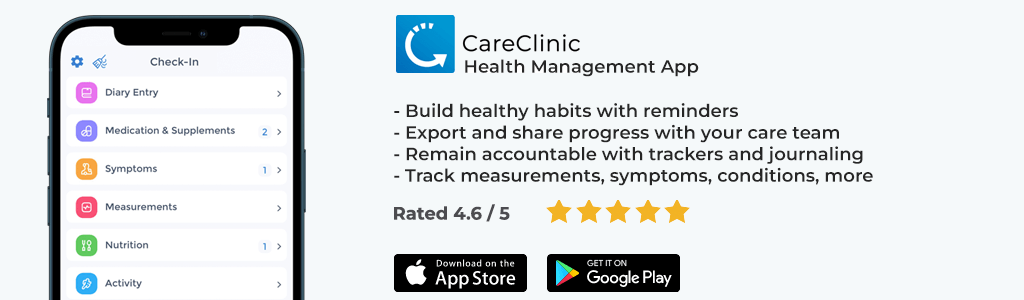
CareClinic keeps this record in one place. Rate itch and other symptoms in a daily check-in, mark affected areas on a body map, and log the factors that came before a flare, such as a new product, stress or sweating. Weather can be added to your check-ins automatically, and reminders help you keep up with moisturiser and prescribed treatment. CareClinic Premium adds photos on symptom entries, so you can compare how a patch looks week to week, and a PDF health report to share with your dermatologist.
The eczema care plan sets up a routine for you, and our eczema guides cover related topics.
When to get medical help for an eczema flare up
See a doctor if treatment is not helping your eczema. Ask for an urgent appointment if your eczema is blistered, crusty or leaking fluid, it is painful, swollen or feels warm, it suddenly gets worse or spreads, or you have a high temperature or feel generally unwell. These can be signs that eczema is infected or of a more serious condition called eczema herpeticum, which may need treatment such as antibiotics. [1]
Eczema flare up questions
Why does my eczema flare up all of a sudden?
A sudden flare usually follows a trigger, even if the link is not obvious. Common culprits include a change in weather, sweating, stress, a new product or detergent, or a skin infection. [1] Checking your record for the previous few days often points to the cause.
What is the best way to calm an eczema flare up?
Keep moisturising often, at least twice a day, and wash with an emollient instead of soap. Keep cool, avoid scratching, and use any treatment your doctor prescribed for flares. [1] The AAD suggests short 5 to 10 minute baths or showers in warm water, then applying moisturiser while your skin is still damp. [2]
Can sweat cause eczema flare ups?
Yes. The AAD notes that sweat from overheating can trigger a flare up, and cold weather can dry the skin and make it flare too. [2] Rinse off and moisturize after exercise, and dress in layers you can remove.
Can stress cause eczema flare ups?
Yes. The NHS lists stress among the things that can make eczema worse. [1] Rating stress alongside itch for a few weeks shows whether your flares follow stressful periods.
Is a full body eczema flare up serious?
A widespread flare needs medical advice, especially if treatment is not helping. Get an urgent appointment if the skin is blistered, crusty or leaking fluid, painful, swollen or warm, or if you have a high temperature or feel unwell. [1]
Can eczema affect your mental health?
Living with eczema can be hard, particularly when itch disturbs sleep. If it affects your mental health, tell your doctor. The NHS notes you may be referred to a mental health specialist. [1]
Is it eczema or psoriasis?
The two can look similar, and both can flare. A doctor or dermatologist can tell them apart by examining your skin. If you have psoriasis, our psoriasis symptom tracker guide explains how to log flares, itch and triggers.
References
- "Atopic eczema". NHS. https://www.nhs.uk/conditions/atopic-eczema/
- "7 dermatologists' skin care tips that can relieve symptoms of atopic dermatitis". American Academy of Dermatology. https://www.aad.org/public/diseases/eczema/types/atopic-dermatitis/atopic-dermatitis-coping