
The biggest names in AI are moving into healthcare. OpenAI launched ChatGPT Health and recently acquired a startup called Torch that unifies lab results and medical records. Anthropic released Claude for Healthcare with Apple Health and Android Health Connect integrations. Google continues expanding its health AI initiatives. The pitch from all of them is similar: connect your medical records to AI, and get personalized health insights in return.
The underlying premise is correct. Fragmented health records are a massive problem. But the way Big Tech is framing the solution raises questions worth asking. When AI companies talk about building “medical memory” systems, who actually owns that memory?
The Fragmentation Problem Is Real
The average American sees multiple specialists, uses several pharmacies, and has health data scattered across dozens of portals. Lab results sit in one system. Prescription history lives in another. Wearable data stays siloed in fitness apps. When you switch doctors or move cities, critical context disappears.
Anyone managing a chronic condition knows this frustration. Explaining your entire medical history to a new provider. Realizing one doctor doesn’t know what another prescribed. Trying to remember when a symptom started or what made it worse.
The concept of a unified personal health record addresses this directly. One place where your complete health picture lives: symptoms, medications, vitals, lab results, lifestyle factors. Something you can reference, share with providers, and use to spot patterns over time.
We’ve been building tools for this problem for years. So we pay attention when trillion-dollar companies suddenly decide fragmented health records are worth solving.

What AI Companies Actually Want
The business logic driving AI healthcare investments is straightforward. Health data is incredibly valuable. Users who share their medical records, symptom patterns, and medication histories provide exactly the kind of longitudinal data that makes AI systems more capable.
ChatGPT Health fields tens of millions of health queries daily. Anthropic’s head of life sciences describes Claude as an “orchestrator” that consolidates personal information, medical records, and insurance data. These systems get smarter as more people use them with more complete health profiles.
The companies promise HIPAA compliance, encryption, and policies against using health data for model training. These commitments matter. But they still represent a model where your health data flows to a third party. The AI company becomes a dependency in your healthcare.
There’s nothing inherently wrong with AI-assisted healthcare. The potential benefits are real. But the current framing treats patients primarily as data sources rather than as people who should own and control their health information.
Medical Memory: What It Actually Requires
The phrase “medical memory for AI” sounds technical, but the concept is simple. It’s the complete context of your health over time, structured in a way that’s useful for analysis.
Building that memory requires more than uploading documents. It means tracking symptoms when they happen, not just recalling them vaguely at appointments. It means logging medications and measuring actual adherence, not just listing prescriptions. It means capturing lifestyle factors that affect outcomes: sleep, nutrition, stress, exercise.
Most importantly, it means doing this consistently over months and years. The valuable patterns don’t emerge from a snapshot. They come from longitudinal data. The correlation between a medication change and symptom improvement. The relationship between sleep quality and flare-ups. The triggers that make some days worse than others.
An AI can analyze your health data, but only if that data exists. There’s no shortcut. The patients who will benefit most from AI healthcare tools are those who’ve already built comprehensive health records.
The Data Gap Wearables and EMRs Don’t Fill
The current AI healthcare push focuses heavily on integrations: pull data from Apple Health, connect to your patient portal, sync your fitness tracker. This is genuinely useful. Steps, heart rate, sleep duration, lab results, prescriptions – all valuable data points that should flow into a unified record.
But wearables and EMRs capture only part of the picture. Your Apple Watch knows you walked 8,000 steps. It doesn’t know you skipped lunch, had a stressful meeting, or tried a new food that might explain tonight’s symptoms. Your patient portal has your prescription list. It doesn’t know whether you actually took your medication on time, or that you’ve been inconsistent for the past week.
The context that explains why your health changes day to day often lives in the details no device automatically captures. What you ate. Your stress level. Your mood. Specific activities beyond what registers as exercise. Bowel patterns. Menstrual cycles. The severity and character of symptoms in your own words.
A complete medical memory needs both: the automated data flowing in from devices and health systems, plus the daily context only you can provide. The integrations matter. The manual logging matters too. Neither alone gives the full picture.
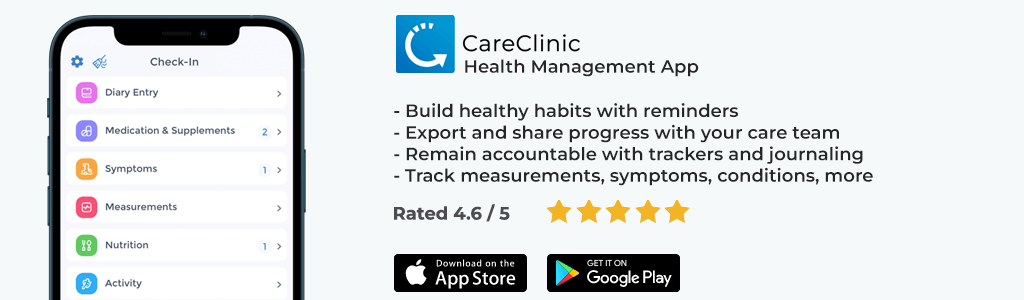
This is where we’ve focused with CareClinic. The platform pulls from Apple Health, Google Fit, glucose monitors, blood pressure devices – all the standard integrations. But it also captures the daily factors that wearables miss. When you combine device data with logged meals, activities, symptoms, and medication timing, patterns emerge that neither source reveals alone.
The Data Ownership Question
Here’s what concerns us about the current AI healthcare narrative. The major players are building systems where technology companies control the health data infrastructure. Patients share their records with these platforms, trusting them to handle sensitive information responsibly.
But what happens when policies change? When a company gets acquired? When a service shuts down? Your medical memory goes with them.
A patient-owned health record works differently. You maintain your data. You decide what to share and with whom. You can export reports for any provider, integrate with any platform, or switch tools without losing your history. The data follows you, not the vendor.
This isn’t an argument against AI in healthcare. It’s an argument for building AI tools that work with patient-controlled data rather than requiring patients to hand over control.
Why This Matters Most for Chronic Conditions
The people most affected by fragmented health records are those managing chronic conditions. Multiple medications, multiple specialists, symptoms that fluctuate unpredictably. These are the patients who need unified records most urgently.
They’re also the patients with the most to lose from data lock-in. A chronic condition means years or decades of health history. Switching platforms shouldn’t mean starting over. Trusting a single company with that accumulated data is a significant commitment.
The enterprise healthcare announcements focus on administrative efficiency: prior authorizations, clinical documentation, claims processing. These matter. But the daily experience of chronic disease management gets less attention in the AI hype cycle.
Better provider conversations. Understanding your own patterns. Preparing for appointments with actual data instead of vague recollections. These outcomes don’t require sophisticated AI. They require systematic tracking and accessible records.
Building Health Records That Last
The attention on unified health records will only increase. Major technology companies are investing billions. Healthcare systems want tools that reduce administrative burden. AI-powered health assistants will get more sophisticated.
Regardless of which platforms win, the patients who benefit most will be those with comprehensive health records. The medical memory that powers useful AI requires actual data to analyze – both the automated streams from devices and the daily context you log yourself.
That data doesn’t appear automatically. It comes from tracking symptoms when they happen, logging medications consistently, recording what you ate and how you felt. The habit matters more than the specific tool.
CareClinic was built for exactly this purpose: patient-controlled data, portable records, wearable integrations combined with daily logging. But the bigger point is simpler. Start tracking your health systematically, somewhere, now. The fragmentation problem is real. Solving it starts with individuals taking ownership of their own health data.
Whatever AI-powered healthcare looks like in five years, the foundation is the same. Complete, accurate, patient-controlled health records. The best time to start building yours was years ago. The second best time is today.