 A self care journal is a place to track your thoughts, feelings, and behaviors around self care. This can be an App, a notebook, or even just a piece of paper. The important thing is that it’s a space for you to be honest with yourself about how you’re doing. Some people find that writing in a self care journal helps them to stay on track, while others find that it’s not as helpful. Ultimately, it’s up to you to decide whether or not keeping a self care journal is right for you.
Why keeping a self-care journal is important
A journal can help you record experiences, symptoms and questions for a healthcare appointment. It is optional. Choosing not to journal does not mean you are less honest or committed to self-care. People managing anxiety, depression, substance use, eating disorders, chronic illness or trauma can discuss with their care team whether writing is useful and what to record. Avoid detailed food or trauma tracking if it worsens symptoms.
5 Benefits of Starting a Self-care Journal
There are many benefits associated with journaling, which suggest that self-care journals can be helpful for individuals who wish to improve their well-being. Some of the potential benefits of keeping a self-care journal include:
1. Allowing you to track your progress over time: By regularly journaling about your self-care journey, you can look back and see how far you’ve come. This can be motivating and help you to stay on track.
2. Giving you a space to vent: Self-care journals provide a safe outlet for any pent-up anger, frustration, or other negative emotions you may be feeling. This can help to prevent these emotions from boiling over and causing problems in other areas of your life.
3. Allowing you to track your triggers: If you find yourself frequently engaging in unhealthy behaviors, a self-care journal can help you to identify the triggers for these behaviors. Once you know what your triggers are, you can work on avoiding them or developing healthier coping mechanisms for dealing with them.

Some people find that using specialized tracking tools helps them spot patterns they might miss otherwise. A whoop journal can show you how your body responds to different situations and stress levels. This kind of detailed tracking gives you hard data to share with your doctor or therapist.
4. Helping you to develop self-awareness: The act of journaling can help you to become more aware of your thoughts, feelings, and behaviors. This increased self-awareness can be beneficial in and of itself, as well as helping you to develop more insight into why you act the way you do.
5. Helping you to find solutions: When you journal about your self-care journey, you may find yourself developing new ideas for how to better take care of yourself. This can be helpful in times when you feel stuck or like you’re not sure what to do next.
The science behind self-care journaling
A systematic review of randomized journaling studies found possible mental-health benefits, but differences in methods and study quality limit the conclusions. This does not establish that any journal format treats PTSD, anxiety or depression, or that everyone will benefit. Journaling can complement an agreed care plan.
How many words or pages do you need to write a day?
There is no set amount of words or pages that you need to write in your self care journal. The important thing is, to be honest with yourself and to write about whatever thoughts or emotions you’re experiencing. If you find that you’re struggling to get started, you can try setting a goal of writing for 10-15 minutes a day, 3-5 times a week. Once you get into the habit of journaling, you can increase the amount of time you spend writing as needed.
What should I write about in my self-care journal?
You can write about whatever thoughts or emotions you’re experiencing. Some people find it helpful to write about their day-to-day experiences, while others prefer to focus on specific issues or challenges they’re facing. If you’re struggling to get started, you can try prompts such as:
- What are 3 things that I’m grateful for today?
- What are 3 things that stressed me out today?
- What are 3 things that I did well today?
- What are 3 things that I could have done better today?
- What are 3 things that I’m looking forward to tomorrow?
These prompts can help you to reflect on your day and to identify areas that you may want to work on. However, it’s important to write about whatever is on your mind, and not to force yourself to write about things that you’re not comfortable with.
Here are a few examples of what you could include in your self care journal:
>>I’m feeling really _____ today and I’m not sure why. I _______ with my roommate this morning and I’ve been feeling on edge ever since. I’m trying to do some deep breathing exercises and relaxation techniques, but nothing seems to be helping.
>>I’m feeling really _____ today. My _________ yesterday and I’m still trying to process it. I keep thinking about all the happy memories we shared together and I can’t believe it. I’m feeling guilty because I didn’t _____________ as much as I wanted to. I’m trying to be grateful for ________________, but it’s just really hard right now.
Here are some positive affirmations that you could write in your journal:
- I am worthy of love and respect.
- I am strong and capable.
- I am worthy of happiness.
- I am doing my best.
- I am loved and supported.
Positive affirmations are good reminders of our strengths and worth. It’s important to be gentle with yourself when journaling and to remember that there is no right or wrong way to do it. The most important thing is that you’re honest with yourself and that you write about whatever thoughts or emotions you’re experiencing when you are having a bad day or an amazing one.
What is guided journaling?
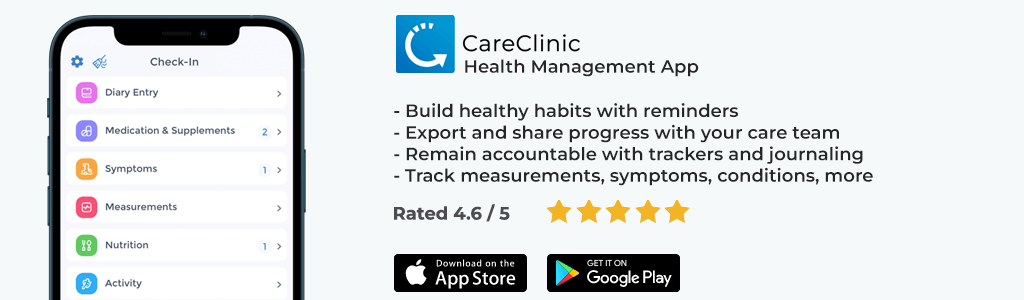
Guided journaling is a type of journaling where you use prompts to help you reflect on specific topics or issues. Guided journaling can be done by yourself or with a therapist, and it can be a helpful way to explore your thoughts and emotions surrounding a particular issue. If you’re struggling to get started, you can tap “Prompts” on the top right side of the screen in the CareClinic app and choose from many different prompts or add your own prompt that you use often.
CareClinic also has built-in guided journals, such as the: Best Month Journal, Productivity Planner Daily, Productivity Planner Weekly, 5 Minute Journal, 2 Minute Journal. We have also added many prompts about: Personal development awareness, values, thoughts, qualities, anxiety and acceptance.
When Should You Journal?
Some people find it helpful to write in the morning, as it allows them to reflect on the day ahead. Others prefer to journal in the evening, as it allows them to process the events of the day and to wind down before bed.
This is also called a night reflection journal, which is a journal that you write in at night, usually before you go to bed. It can be used as a way to process the events of the day and to wind down before sleep. Ultimately, the best time to journal is whenever you have the time and inclination to do. The best thing you can do is create your own self care routine which includes journaling, something like 7:00pm every Monday?
How often can you write in your self-care journal?
Some people find it helpful to write in their journal every day, while others prefer to write less frequently. The important thing is to journal when you feel like you need to or when it fits into your schedule. If you find that you’re struggling to keep up with your journal, you can try setting a goal of writing 3-5 times a week.
What if I don’t have time to journal?
If you don’t have time to write in your journal every day, that’s OK. The important thing is to journal when you can and to be honest with yourself about what you’re able to commit to. If you find that you’re struggling to make time for your journal, you can try setting a goal of writing for 10-15 minutes a day, 3-5 times a week. Once you get into the habit of journaling, you can increase the amount of time you spend writing as needed.
How can you make self-care journaling easier?
There are a few things that you can do to make self care journaling easier:
- Set a goal of writing for 10-15 minutes a day, 3-5 times a week.
- Find a quiet, comfortable place to write.
- Keep a pen and paper handy so that you can journal whenever the mood strikes you.
- Set aside time each day or week for journaling, and stick to it as much as possible.
- Write about whatever thoughts or emotions you’re experiencing, without censoring yourself.
- Be honest with yourself about what you’re able to commit to. Don’t worry if you can’t keep up with your journal or if you miss a day of writing. The most crucial thing is to not stress yourself out and to write in your journal when you have the chance.
Should a self care journal be kept private?
Some people find it helpful to share their journal with a friend or therapist, while others prefer to keep it private. Ultimately, the decision of whether or not to share your journal is up to you. If you do decide to share it with someone, be sure to choose someone who you trust and who will be supportive.
Using an app or a physical diary
Choose the format you can use comfortably. A notebook is simple and does not require an account. CareClinic can keep journal entries alongside symptom, mood, sleep and medication records, reminders, charts and reports. Check the current app and plan for available features. You can use a mood tracker to record changes for discussion with your care team. Review privacy settings and decide what to share. A diary shows observations and possible associations, not a diagnosis or proof of a trigger.
Is there a difference between a bullet journal and self care journal?
A self-care journal is a specific type of journal that focuses on your mental and emotional well-being. A bullet journal is a general term for any type of journal that uses bullet points to help organize your thoughts. While a bullet journal can be used for self-care purposes, it is not specifically designed for this purpose.
And what about a gratitude journal?
A gratitude journal generally encompasses writing down things that you’re grateful for. This can be an effective way to boost your mood and to refocus your attention on the positive things in your life much like a self-care journal. Choose a practice that feels useful to you. No journaling method guarantees a particular mood or health outcome.
Not ready for an entire journal dedicated to mental health? Hello, self-care page
Consider keeping self care pages are simply pages within a journal that are specifically devoted to self care. This can include writing about positive experiences, setting goals, and tracking progress. Additionally, self-care pages can provide prompts and ideas for things to do when feeling low or stressed.
10 self-care ideas you can engage in
You can build a self care routine and engage in these activities to improve your overall mood and well-being.
1. Get regular exercise: Exercise releases endorphins, which have mood-boosting effects.
2. Spend time in nature: Being in nature has been shown to reduce stress levels and improve mood.
3. Connect with friends and family: Spending time with loved ones can help reduce stress and promote feelings of happiness and well-being.
4. Practice meditation or mindfulness: Meditation can help to focus the mind and promote relaxation.
5. Get enough sleep: Sleep is essential for good physical and mental health.
6. Eat a healthy diet: Eating nutritious foods can help improve mood and energy levels.
7. Take breaks during the day: Taking regular breaks throughout the day can help to reduce stress and improve concentration.
8. Avoid drugs and alcohol: Drugs and alcohol can have negative effects on mental and physical health.
9. Do something you enjoy: Doing things that you enjoy can help reduce stress and promote happiness. Don’t overlook the simple things in life you may enjoy such as reading, listening to music, coloring, a bubble bath, or spending time with your baby or a pet.
10. Give back: Helping others can boost mood and promote a sense of satisfaction.
Depression Self-Care Checklist to Use With Your Journal
This checklist can make it easier to choose one small action when motivation is low. Use the journal to note what you tried and how you felt, but do not treat journaling or self-care as a replacement for depression treatment or professional support.
- Choose: Select one item from the self-care ideas above instead of trying to complete the whole list.
- Plan: Write when and where you will try it, then make the step smaller if it feels unrealistic today.
- Review: Note whether you tried it, what got in the way, and how you felt afterward without treating a missed item as failure.
- Escalate: Record the clinician, support service, or trusted person you can contact if symptoms become harder to manage.
Adapt the four steps to your energy, access to support, and treatment plan. If you use the checklist daily, keep only a few practical items. Focus the review on feelings, barriers, and what helped. Treat the journal entry as personal reflection, not as a mood assessment or diagnostic test.
This self-care checklist for depression is not for managing a crisis alone. Seek immediate local emergency or crisis support if you have thoughts of harming yourself, feel unable to stay safe, or are in immediate danger. Contact a qualified healthcare or mental health professional when depression symptoms persist, worsen, or interfere with daily life.
Choose a reason that matters to you
You do not need a celebrity example or a perfect routine. Start with one entry about something you want to understand, then decide whether the practice helps.
Journaling for Stress Relief

A self-care journal can also be a journal for stress relief. Writing gives you a private place to name what happened, describe how you felt, and separate facts from worries. Reviews of expressive writing research suggest that journaling may help some people manage stress and mental health symptoms, but it is a self-care practice rather than a replacement for professional care.
How stress journaling can help
Stress journaling turns an experience into something you can examine. An entry can release feelings you have been holding in, show recurring triggers, and help you consider a next step. Looking back may also reveal links between stressful situations, thoughts, actions, sleep, symptoms, and coping strategies. That perspective can make a difficult situation feel more specific and manageable.
Two techniques to try
For gratitude journaling, write three specific things you appreciated and why each mattered. For stream-of-consciousness writing, set a short timer and write whatever comes to mind without editing. The first method directs attention toward positive experiences. The second clears space for thoughts and feelings that are difficult to organize. Try both, then keep the method that feels useful.
Build a routine and choose a useful setting
Choose a time you can repeat, such as after breakfast or before bed. Ten to fifteen minutes is enough to begin. Keep a notebook nearby or set a reminder in your journal app. A quiet, comfortable setting can help, but consistency matters more than creating a perfect ritual. If daily writing adds pressure, use a schedule that fits your week.
Move past writer’s block and protect your privacy
If you do not know what to write, start with one prompt: What stressed me today? What did I notice in my body? What helped, even a little? You can also describe the room, the day, or the fact that writing feels difficult. Keep a paper journal in a secure place. Before choosing a digital journal, review its privacy policy, sharing settings and available device or app locks. A lock alone does not establish how a service stores or shares data. Share an entry only when you choose to.
If writing increases distress, stop or switch to a neutral prompt. You do not need to revisit trauma on your own. Ask a qualified mental health professional for support if distress persists. Journaling does not replace professional treatment or crisis care. Seek immediate local emergency or crisis support if you feel unable to stay safe.
Review patterns without judging yourself
The value of regular journaling builds through review. Every week or month, look for repeated stressors, helpful responses, and changes in your mood or symptoms. In CareClinic, you can write journal entries, use prompts, set reminders, and log mood, symptoms, sleep, medication, and other health factors. Charts and reports can help you compare those records and share relevant patterns with a clinician or therapist. Treat the record as information, not a score.
For research context, see this systematic review of journaling and mental health. Its findings suggest possible benefit alongside care, with substantial differences between studies and limits in the evidence.
Start your self care journey
Self care journals allow for deep reflection and understanding of oneself. They are an excellent way to become more aware of your mental and emotional health. They allow you to track your progress, reflect on your thoughts and feelings, and set goals for yourself.
CareClinic is a great app to use for self care journaling because it allows you to customize your entries, set reminders, and track your progress over time. If journaling feels useful, keep a manageable routine and review it alongside your other self-care and treatment. So what are you waiting for? Start your self care journey today, download the App by tapping the banner below and get writing!