Bipolar Mood Tracker App: Tips to Spot Swings and Journal
33 min read | Updated on:
One day, you wake up and feel on top of the world. You feel like you can do anything; even your friends question if you’ve had too much caffeine! Three days later, it all just disappears. You feel lethargic, your motivation is gone, and nothing seems exciting anymore. For lack of a better term, you feel severely depressed. If these dramatic and constant mood fluctuations seem familiar to you, you may be part of the 1% of the global population suffering from bipolar disorder1. Each person’s experience with bipolar disorder can vary. Thus, you must understand your moods and how they change to properly manage your disorder.
Similar systematic tracking approaches are used across various neurodevelopmental conditions where mood and behavioral patterns need careful monitoring. For individuals managing multiple conditions or seeking comprehensive tracking methods, understanding the autism diary definition can provide valuable insights into structured documentation techniques that complement bipolar mood tracking. These parallel tracking methodologies often share common elements in pattern recognition and data collection that can enhance overall mental health management strategies. Bipolar mood tracker apps or mood trackers for bipolarity are a great place to start recording patterns of mood and key emotions that signal a manic (extreme joy) or depressive episode.
What is Bipolar Disorder?
Bipolar disorder is known by several names, including manic-depressive illness or manic depression. Regardless of the name, bipolar disorder is characterized by intense and drastic shifts in mood, energy, thought, and behaviour. Some may experience these shifts, or episodes, that last for only hours, while others experience them for days, weeks, or even months. As such can severely compromise your ability to carry out daily activities in the long term, as it is a chronic mental health condition.
Understanding the Types of Bipolar Disorder
If you were to search online for “bipolar mood disorder,” you would likely come across many stories, each recording a different experience with the disorder. These experiences can generally be grouped into one of the two types of bipolar disorder.
What is Bipolar I Disorder
Bipolar 1 is generally defined by the presence of a syndrome and manic episodes; however, it is important to note the selectivity regarding what is considered mania.
The management of Bipolar I disorder often involves a combination of mood stabilizers and antipsychotic medications to control both manic and depressive episodes. Among the treatment options, Seroquel for bipolar disorder has emerged as an effective medication that can address both phases of the disorder, particularly helping to stabilize severe manic episodes while also providing relief during depressive periods. The medication’s dual action makes it particularly valuable for individuals experiencing the intense mood swings characteristic of Bipolar I disorder.
Mania is severe, with a dramatically elevated or irritable mood lasting for a minimum of 1 week. In contrast, hypomanic symptoms are only mild to moderate and last for a minimum of 4 days. For an individual to diagnostically qualify as having bipolar 1, they must experience at least one manic episode, preceded or followed by either a hypomanic or depressive episode. Moreover, bipolar 1 has a global lifetime prevalence of 0.6 to 1%.
Additionally, mania is recognised by abnormally high emotions, energy, and irritability2. People going through mania appear talkative, hyper, and more likely to engage in activities that can cause them physical, social, or even financial harm. These changes are very apparent to those around them and can sometimes even be accompanied by delusions, hallucinations, or other psychotic symptoms.
What is Bipolar II Disorder
Contrastingly to bipolar 1, bipolar two is defined by the presence of hypomanic and depressive episodes. Note the distinction between hypomania and mania – they are two different states of emotion despite some overlap. As we have already stated, hypomania lasts for much less time and, in general, is not as severe as mania, though elevated mood, excitability and motivation are still prevalent.
Depressive episodes, on the other hand, are exactly what they sound like – periods of extreme depression. This can include a loss of interest in most activities, tiredness, lethargy, appetite and sleeping changes, as well as worthlessness and hopelessness. Bipolar 2 has a similar prevalence rate as bipolar 1, with an estimated global lifetime prevalence of 0·4–1·1%.
Diagnostic guidelines for bipolar 2 include experiencing at least one hypomanic episode and a major depressive episode, with no requirements regarding manic episodes. Keeping track of these requirements can be difficult during the diagnosis process of bipolar disorder.
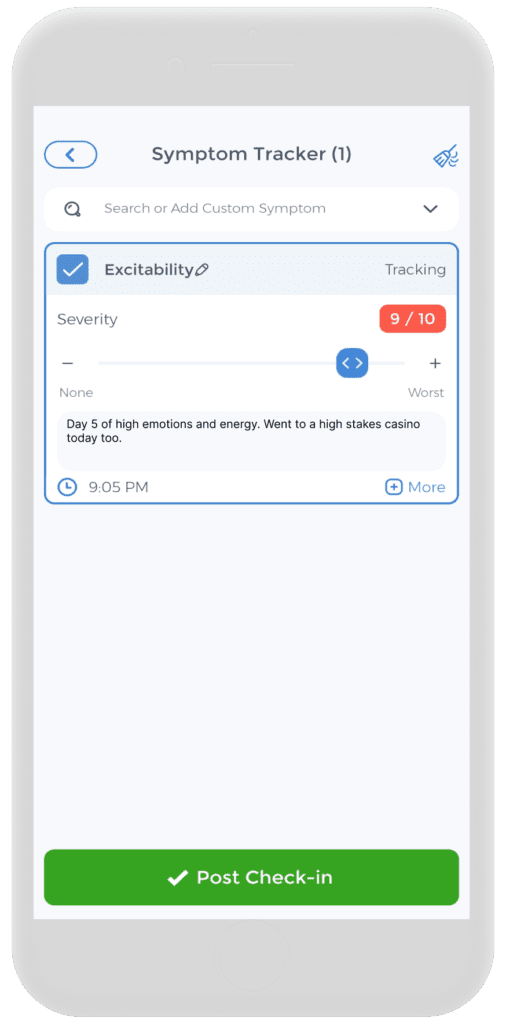
Therefore, a symptom tracker, such as the one included in the CareClinic app, is a great way to stay aware of your symptoms. The app allows you to track your symptoms every day, and the chart tool allows you to determine the persistence of each symptom at just a glance.
As an example, CareClinic makes it easy to distinguish between hypomania and mania, allowing you and your doctor to come to a diagnosis with less complication.
Symptoms of Bipolar Disorder
So far, we have only briefly touched on the main symptoms that compose each of the episodes of bipolar disorders. There are many more symptoms that can give you a much more comprehensive view of what bipolar disorder encompasses.
Characteristics of Mania Bipolar Disorder
Symptoms of manic episodes include:
Excessive happiness, hopefulness, and excitement
Sudden drastic changes in mood
Restlessness2
Rapid speech and thoughts
Increased energy and less sleep
Increased impulsivity and poor judgment
Making grand, unrealistic, and unachievable plans
Reckless and risk-taking behavior
Feeling unusually important or powerful
Psychosis2
Recall that hypomania has the same symptoms but at a much milder level. You may feel great, productive, and unstoppable, but the major difference is in the functionality of the symptoms. With hypomania, social situations are still manageable and tolerable, unlike mania.
Characteristics of Depression
Symptoms of a severe depressive episode include:
Overwhelming sadness
Low energy, motivation, and fatigue
Feelings of hopelessness or worthlessness
Loss of enjoyment
Difficulties with concentrating and decision-making
Uncontrollable crying
Irritability
Insomnia or excessive sleep
Changes in appetite
Suicidal ideation
Causes of Bipolar Disorder
Though a set cause of the bipolar disorder has not yet been identified, many researchers believe there is a strong genetic component to the disorder2. More than 60% of individuals with the disorder have a close biological relative with the same condition2. However, it is always important to remember that just because there is a family history of bipolar disorder doesn’t mean you will develop it. Think of it as blue eyes: your grandma may have blue eyes, but that doesn’t mean you will have them too, especially if your parents both have brown eyes.
Other factors that may contribute include changes in the physical brain, including differences in the average size and activation of certain brain structures. While this is a common trend across some cases of bipolar disorder, a brain scan that matches these abnormalities does not necessarily mean the individual has bipolar disorder.
Finally, trauma, stress and other environmental factors show a significant impact on the development of the disorder2. The death of a loved one, illness, financial problem or other stressors can trigger manic or depressive episodes in a person. These events can therefore play a hand in the onset of bipolar disorder.
Treatments for Bipolar Disorder
1. Cognitive Behavioural Therapy (CBT)
As with most mental illnesses, psychotherapy, or talk therapy, can be an instrumental part of treatment. Although there are a variety of therapies, they all share one goal: to help you identify and reinvent troubling emotions, thoughts, and subsequent behaviors. Some types of therapy include family-focused therapy, interpersonal and social rhythm therapy, and psychoeducation. However, one of the most promising up-and-coming therapies is CBT or cognitive behavioural therapy2,3.
CBT is generally targeted toward four areas of the treatment process:
Easing bipolar symptoms and episodes3
Enforcing drug treatment regimens3
Identifying early signs and prevention of episodes3
Treatment of comorbid conditions such as borderline personality disorder (BPD) 3
These goals are met across a limited number of sessions – usually anywhere from 5 to 202,3.
How does CBT work for Bipolar Disorder?
To understand how CBT works, put yourself in the shoes of a therapist. Before you try to make any changes, you need to lay down a foundation. How do you do this? Well, gain an understanding of the issue. Ask your patient to talk about what they’ve been going through and try to understand the issues they are facing.
Once you know where to start, you need to gain more in-depth information. Were there any traumatic events that could have influenced this patient, any fears, phobias, or thoughts of concern? People in they’re the life of great significance and their relationships with them? The only way you can get this information is by, of course, asking! Asking questions is a vital part of the therapy process and helps you gain insight into the patterns of behaviour a person may engage in when challenges arise.
Everyone always says that it’s easier for the people around you to notice behavioural issues than yourself. This, to an extent, is true. Once you have a good understanding of the patient, problematic thoughts, behaviours, and lifestyle patterns will likely pop out at you3. In turn, you can help your patient identify their unhealthy habits and stay aware of them.
Now that you’ve identified the issues, the only step left is to work through them. Coping mechanisms and active strategies can help turn negative emotions into positive ones. They can help you change your perspectives and develop better, healthier patterns and behaviours. These skills are the ones you will help them to develop, not only for the present but for the future as well.
Tracking your Health with CBT
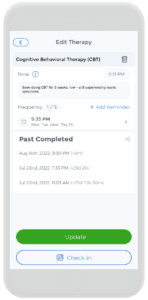
Therapy doesn’t always work for all. Tracking your progress in therapy in the CareClinic app allows you to reap the benefits and determine if it is worth continuing with just a glance.
CareClinic wants what’s best for you by allowing you to make informed decisions in every part of your treatment journey, allowing you to be the best version of yourself sooner!
Medications for Bipolar Disorder
Medication is generally the first-line treatment for bipolar disorder. Specific types of medication can target different aspects of the illness:
Mood stabilizers can help you manage manic and hypomanic episodes. They live true to their title by stabilizing emotions you may be experiencing and leveling you out. Some common mood stabilizers include lithium (Eskalith, Lithobid, Lithonate), valproic acid (Depakene), and Carbamazepine (Tegretol, Equetro) 2.
Atypical neuroleptics (antipsychotics) improve thinking, mood and behaviours by influencing the release and uptake of specific neurotransmitters in your brain. These medications can be beneficial for both manic and depressive episodes. Some common atypical neuroleptics include cariprazine (Vraylar), lurasidone (Latuda) and quetiapine (Seroquel) 2.
Antidepressants are mainly used to treat major depressive episodes by increasing the uptake of happy neurotransmitters. These medications are never used alone as they can trigger a manic episode. Some common antidepressants include vilazodone (Viibryd), citalopram (Celexa) and sertraline (Zoloft).
Bipolar Mood Tracking Apps and Tools
Bipolar disorder is a complex mental health condition that affects millions of people worldwide. Characterized by extreme mood swings, including periods of manic highs and depressive lows, bipolar disorder can have a profound impact on a person’s daily life and overall well-being. Understanding the nature of this disorder is essential for effective management and treatment. In this comprehensive guide, we will explore the importance of bipolar mood tracking and how it can empower individuals to take control of their mental health.[1]
The Role of Mood Tracking in Bipolar Disorder
Mood tracking is a crucial aspect of managing bipolar disorder because it allows individuals to monitor their mood patterns, identify triggers, and gain insights into their emotional well-being. By keeping a record of their daily moods, thoughts, and activities, individuals with bipolar disorder can better understand the rhythm of their condition and make informed decisions about treatment and self-care.
The Concept of Mood Tracking
Mood tracking is a method used by individuals with bipolar disorder to keep a detailed record of their daily moods, thoughts, and activities. It involves regularly documenting their emotional state throughout the day, noting any significant changes or fluctuations. This practice helps individuals gain a deeper understanding of their mood patterns, identify potential triggers, and recognize early warning signs of mood shifts.
Benefits of Mood Tracking for Bipolar Disorder
The benefits of mood tracking for individuals with bipolar disorder are numerous and significant. Firstly, it provides a tangible record of their emotional well-being, allowing them to identify patterns and trends in their moods over time. This information can be invaluable in helping individuals recognize and anticipate mood shifts, enabling them to take proactive steps to manage their condition.
Mood tracking also helps individuals identify triggers that may contribute to mood swings or episodes. By carefully documenting their daily activities, sleep patterns, medication intake, and external factors, individuals can identify potential triggers such as stress, lack of sleep, or certain medications. Armed with this knowledge, they can make informed decisions about lifestyle changes or adjustments to their treatment plan.
Furthermore, mood tracking provides individuals with a sense of control and empowerment over their condition. By actively engaging in the process of monitoring and recording their moods, individuals become more attuned to their emotional well-being and develop a deeper understanding of their own unique patterns and needs. This self-awareness can lead to improved self-care practices and better overall management of bipolar disorder.
How Mood Tracking Contributes to Treatment
Mood tracking plays a crucial role in the treatment of bipolar disorder. The information gathered through mood tracking can be shared with healthcare professionals, providing them with valuable insights into the individual’s condition. This data can help healthcare providers make more accurate diagnoses, tailor treatment plans to the individual’s specific needs, and monitor the effectiveness of prescribed medications or therapies.
Additionally, mood tracking enables individuals to actively participate in their own treatment. By regularly monitoring their moods and documenting any changes, individuals can provide their healthcare team with real-time information about their condition. This collaborative approach fosters a stronger patient-provider relationship and allows for more personalized and effective treatment strategies.
Mood tracking is an essential tool for individuals with bipolar disorder. It allows them to gain a deeper understanding of their condition, identify triggers, and make informed decisions about their treatment and self-care. By actively engaging in mood tracking, individuals can take control of their emotional well-being and work towards achieving stability and improved quality of life.[5]
Tools and Techniques for Bipolar Mood Tracking
When it comes to managing bipolar disorder, tracking your mood is an essential part of the process. By keeping a record of your daily moods and activities, you can gain valuable insights into your emotional patterns and triggers. Fortunately, there are various tools and techniques available to help you with this process.
Traditional Methods for Mood Tracking
One of the most traditional ways to engage in mood tracking is by using pen and paper to record your daily experiences in a journal or diary. This analog approach allows for a more tangible and reflective experience. By taking the time to physically write down your thoughts and emotions, you can gain a deeper understanding of your mental state.
Additionally, traditional mood tracking methods often involve the use of mood charts or mood rating scales. These tools allow you to rate your mood on a scale from 1 to 10, helping you track your emotional fluctuations over time. By visually representing your mood patterns, you can identify trends and make informed decisions about your treatment plan.
Digital Tools for Mood Tracking
In today’s digital age, there is an abundance of mobile apps and online platforms specifically designed for mood tracking. These digital tools offer convenience and efficiency, making it easier than ever to monitor your emotional well-being.
One popular digital tool for mood tracking is the CareClinic App. This comprehensive mobile app provides a range of features to support individuals with bipolar disorder. With the CareClinic App, you can record your moods on-the-go, set reminders to track your emotions regularly, and even gather valuable insights from your data.
Furthermore, digital tools often offer additional functionalities that can enhance your mood tracking experience. For example, some apps allow you to track your sleep patterns, exercise routines, and medication intake, providing a more holistic view of your overall well-being. By incorporating these factors into your mood tracking, you can identify potential triggers and make necessary adjustments to your lifestyle.
Choosing the Right Mood Tracking Tool
With so many options available, it’s important to choose a mood tracking tool that aligns with your specific needs and preferences. Consider factors such as ease of use, data visualization capabilities, and compatibility with your devices. Additionally, take into account any additional features that may be beneficial for managing your bipolar disorder.
Remember, the goal of mood tracking is to gain a deeper understanding of your emotional patterns and make informed decisions about your mental health. Whether you prefer the traditional pen and paper method or the convenience of digital tools, finding the right mood tracking tool can be a valuable asset in your journey towards stability and well-being.[6][7]
2. Tracker and Journaling Apps
Mood happens to be the most common transdiagnostic factor in tracking your mental health and well-being. Multiple studies have shown that mood tracing is one of the best ways to produce awareness and become mindful of your own mental health. Participants of these studies have found it even more beneficial to look at a screen and simply see their mood displayed over a large period of time.
More specifically, tracking your mood can help you feel more self-aware, promote self-reflection, and help you relate your mood to other factors in your life. Accordingly, you may even find that writing down your mood at one time and looking back on it later can help you identify if negative feelings were validated or “worth it.” Moreover, you may also find that a specific negative emotion is often accompanied by some part of the environment. It’s all basic math after that! Subtracting the negative influence equals a better overall mood. Thus, having these tools handy gives you everything you need to make insights, intervene, and change your mood for the better.
Using a Tracker Bullet Journal
Many different trackers are available on the market, ranging from bullet journals, coloring pages, worksheets, and apps. I will always recommend using a digital diary. It’s just the most convenient for me; however, if you are more of a visual person, a bullet journal with coloured blocks may work better for you! Perhaps you prefer to write out how you feel instead, then a worksheet or notes tracker may be your best bet! The most important thing to consider is that the tracker you choose suits you and your needs. Regardless of which you decide to go with, keeping a bipolar mood tracker printable pdf bookmarked on your browser, a tracker journal or a tracker bullet journal, or even a chart or note tracker, can help keep your mood, thoughts, and emotions in line.
Utilizing Tracker Apps
We do everything on our phones. And that’s not necessarily something to be ashamed of (no matter how much your parents disagree). Most of us, myself included, don’t go anywhere without our phones. So imagine you’re at the grocery store and feeling zoned out, down, and uninterested in any of the food you need to restock on. You recognize the signs of a depressive episode immediately but oops! You forgot your fancy TikTok-inspired colour mood chart inside your tracker bullet journal at home! But, not to fear, you simply need to search up the “best bipolar mod tracker app” online, and boom, you’re all set and ready to go!
3. Worksheet or Paper Log
Printable PDF for Yourself and Kids
Online bipolar mood disorder trackers are convenient, easily accessible and an excellent option for people who are always on the go. While you’re at home, a bipolar mood tracker printable pdf worksheet is always available if you want to switch things up occasionally.
Some people may not even use a tracker app. A note tracker journal, digital worksheet, or even a colouring page meant for kids on your phone can work well. However, the main reason to switch to digital is that the analysis tools and pattern recognition in these bipolar mood tracker apps provide a benefit that you may not be able to uncover quite so easily or quickly.
If you are looking for a bipolar mood tracker PDF instead of an App, click the link below:
You may not know what to write in journal mood trackers, and that’s okay! Each person is different and may require different things! Here is a list of some common trends across bipolar mood tracker journals and the best bipolar mood tracker apps:
Look for a tracker that allows you to record the lows but also the goods! A mood tracker should allow you to track whatever you feel. However, you feel it. Entering your own emotion instead of one from a pre-set limited list may help you maintain a better and more detailed understanding of your emotions in the long run.
This is a big one. You must be able to record how quickly and how long your moods last, especially for individuals with bipolar disorder. When questioning what to write in journals or trackers in general, do not hesitate to write down the time and date of your log.
Other BPD Mood Factors
Oftentimes, bipolar can easily be mistaken for other disorders, such as BPD. The more comprehensive and overall view you have of your mental health, environment, and triggers, the easier it may be for your physician to come to a diagnosis. Both BPD trackers and bipolar trackers will track mood. However, a bipolar tracker may be more focused on duration and intensity, while BPD trackers may be more focused on triggering events. Nutrition, sleep, and medications are also factors that are great additions to BPD trackers, bipolar mood tracker apps or worksheets.
Interpreting Mood Tracking Data
The key to effective mood tracking lies in interpreting the data collected. By identifying mood patterns, triggers, and warning signs, individuals can proactively address their mental health needs and prevent potential episodes. Understanding how specific events, lifestyle factors, or medication changes influence mood fluctuations is crucial for developing personalized strategies for managing bipolar disorder.
When it comes to understanding mood patterns, it is important to recognize that everyone’s experience with bipolar disorder is unique. Some individuals may experience distinct cycles of mania and depression, while others may have more subtle mood shifts. By consistently tracking and analyzing mood data, individuals can start to identify their own unique patterns and gain a deeper understanding of how their moods fluctuate over time.
Identifying triggers and warning signs is another essential aspect of interpreting mood tracking data. Triggers can be anything from stressful life events to certain medications or even changes in sleep patterns. By closely examining the data collected, individuals can begin to identify common triggers that may lead to mood episodes. This knowledge allows them to take proactive steps to avoid or manage these triggers, reducing the risk of destabilization.
Furthermore, mood tracking data can be a valuable tool in therapy sessions. By sharing the collected data with a mental health professional, individuals can gain additional insights and guidance in managing their bipolar disorder. Therapists can help interpret the data, identify patterns, and provide strategies for coping with mood fluctuations. This collaborative approach between the individual and their therapist can greatly enhance the effectiveness of mood tracking as a management tool.[8][9]
What to Share with the Doctor
Diagnosing bipolar disorder is much harder than it may seem. There is, in fact, no definitive diagnostic system for the disorder. This, coupled with varying definitions of the disease by different organizations, makes a universal diagnostic system difficult to achieve. Despite these hurdles, health care providers have a sort of checklist including strong and suggestive indicators that can help set this disorder apart. These indicators, along with screening questionnaires, such as the Mood Disorder Questionnaire, help with suggesting bipolarity as a possible diagnosis.
These questionnaires and indicators tackle a variety of different aspects of bipolar disorder. If you have been tracking your mood, instead of having to think back and give rough answers, an accurate and reliable set of information is available! Using your mood tracker is relatively easy: record your emotion, level of emotion, frequency and time of occurrence, and any other notable events or factors that appear to correlate.
This information then becomes accessible to your healthcare provider, giving them a much more comprehensive view of what you have been experiencing.
Frequency and Duration of Bipolar Episodes
We’ve already discussed that timing is vital to consider when diagnosing bipolarity. Healthcare professionals consider brief but highly recurrent bipolar episodes a strong indicator of bipolar disorder by healthcare professionals.
This will most likely be one of the first pieces of information they will ask you to recall. Additionally, patterns such as seasonality and even the abrupt nature of onset and offset are suggestive features your doctor will want to analyze.
Make sure to track exactly when your moods begin, end, and recur in your mood tracker!
Symptoms During the Bipolar Episode
Remember that list of symptoms from earlier? For both mania and depression? Make sure to remember those because simply saying you experience depression is likely not the information your physician is looking for. Atypical symptoms of depression, such as fatigue, are another strong bipolarity indicator6. When you are recording your emotions through an episode, make sure to be specific and touch on all the symptoms you are experiencing, not just depression as a whole, for example. This provides more clarity and gives your provider a detailed view of your disorder.
The Environment of your Bipolar Episode
Make sure to share the other events recorded in your mood tracker! Whether it be nutrition, medications, therapy or an event diary, these factors can give valuable clues to your healthcare provider about what disorder you’re experiencing. Subsequently, bipolar symptoms during menstruation or postpartum or a lack of response to antidepressants are highly suggestive features of bipolar disorder6. Keeping track of these features in your mood tracker and correlation charts can help you and your physician determine if other factors are impacting your disorder.
Using a Bipolar App to Manage Your Mental Health
Bipolar disorder affects 5 million people in just the United States and disrupts everyday activities by causing fluctuating moods. While no cure exists, medication, therapy, and lifestyle changes can control it effectively. To manage your mood and reduce stress—a key factor in depressive episodes—you should use CareClinic, a dedicated bipolar app. This app streamlines your mental health management with features like check-ins, mood tracking logs, and reports.
Smartphone applications, such as the CareClinic health app, can now be used to track mood changes and additional symptoms of bipolar disorder so that we can lead a life that is healthier and more balanced.
It is difficult to live with bipolar disorder, especially when it comes to establishing connections with other people and maintaining an adequate quality of life. With the help of bipolar apps, one can develop emotional intelligence and build self-awareness. Goals can be easily set up and followed through for improvement.
A comprehensive treatment plan & medication reminders
Another advantage of the application is that you can use it to create a comprehensive treatment plan. You can rely on the app to add all of the therapies you have undertaken, as well the different types of medication and other treatment solutions. You can review the treatment plan at any moment you might desire and make changes when necessary. For each medication, you can add the dosage, frequency and potential side-effects. The application can even generate information on potential interactions between different drugs.
When you suffer from a condition such as bipolar disorder, it can be difficult to keep track of every treatment. Applications such as CareClinic offer a simple and effective method of keeping track of one’s treatment. They will ensure that you stay safe while taking medication, managing your mood in an appropriate manner.
If you have difficulties keeping track of all your medication, you might want to consider setting up a reminder. This is easy to do, even when you do not have too much experience with smartphone apps. Upon setting a reminder, the application will send you a push notification. The snooze feature is useful in the situation that you fail to take your medication at the reminded date.
It is also useful to know that you can set up reminders for doctor or therapy appointments so that you never forget when the next visit will take place. Reminders can be used for prescription refills or any other things you need to remember as part of a busy schedule.
A self-care plan for Mental Health
Aside from using the CareClinic health tracker as a bipolar tracker, it is convenient to use it to create a self-care plan. What kind of things should this plan include? Well, for instance, you might add techniques that you have found to be useful in dealing with the symptoms of your illness.
You can add the deep breathing technique, as this has been found appropriate for dealing with chronic stress or sadness. It is based on diaphragmatic breathing and, believe it or not, it can actually improve your mood. Research has confirmed that it actually has a calming effect, deactivating the fight-or-flight response. The more often it is practiced, the easier you will find it to calm yourself in times of stress.
A built-in journal to deal with emotions
A huge part of living with a bipolar disorder involves dealing with a whirlwind of emotions, either positive or negative. The CareClinic app offers a built-in journal, in which one can write about the emotions experienced and detail coping strategies.
It can be therapeutic to share how you are feeling, not to mention you can always go back to what you have written and see what made you feel in that particular way. You will find it easier to manage your mood, identifying the things that can make you relapse.
Use the journal to document daily events and do not hesitate to be honest, as you stand a lot to gain from speaking from the heart. Mention if you have made progress and appreciate yourself for the effort you are making. The journal will help you discover negative behavioral patterns and, at the same time, establishing healthy ones.
As you will document your day and analyze your mood swings, you will be able to discover the connection between daily activities and your depression/mania. The journal entries can be shared, when desired, with healthcare professionals, guiding the treatment in the right direction.
Using Care teams to Keep You on Track
The CareClinic health app allows you to create a care team, in which you can add family members, friends and healthcare professionals. You can connect with them and receive the necessary support, thus ensuring the desired relapse prevention. You can inform your care team about mood changes and early warning signs, as well as about the treatment progress you have made.
Everything you need to know on the bipolar disorder
As it was mentioned in the beginning of the article, bipolar disorder is a mental health issue, which is defined by the alternating episodes of mania and depression. The condition can disrupt daily life, affecting academic or work performance, as well as personal relationships.
Once known as manic depression, it is characterized by serious mood changes, which can affect energy levels, thinking and behavior. The mood swings can be so severe that they will prevent one from functioning.
Cause(s)
Despite extensive research, there is no known cause that can lead to bipolar disorder. A number of risk factors, however, have been identified. A family history of bipolar disorder or other mental health issues, chronic high levels of stress, brain chemical imbalances and physical illness are among the most common risk factors. Those who have suffered from trauma, relationship difficulties, abuse or loss, are also at risk of developing such a condition. (R)
Are there any warning signs?
Mania
Person experiences intense feelings of happiness or elation for an extended period
High energy levels, one does not feel the need to sleep
Impulsive, risky or reckless behavior (gambling for example)
Fast-talking & racing thoughts
Exhibiting excess confidence
Goes from one activity to the other, without finishing
Gets easily distracted.
Depression
Experiencing feelings of sadness for an extended period
Social isolation – avoids interacting with friends, family members, co-workers
No longer interested in otherwise pleasurable activities
Loss of appetite
Low energy levels
Memory impairment & concentration difficulties
Poor-decision making abilities
Self-harm or suicidal thoughts; might become preoccupied with death. (R)
How to manage the bipolar disorder
Given the severe consequences this condition can have on the general well-being, it is essential to find the best management solutions. As a rule, most people who suffer from this condition are advised to take both medication and go to therapy. The earlier the intervention is started, the better the prognosis is going to be.
These are the most common intervention solutions for bipolar disorder:
Medication and hospitalization in case of acute mania
Lithium and valproic acid to stabilize the bipolar disorder (manic episodes)
Neuroleptic medication for psychosis
Benzodiazepines in case of agitation (risk of addiction)
Patients are taught how to manage their condition, learning how to recognize their triggers and identify episodes of mania/depression. Lifestyle changes, such as becoming more physically active, eating healthy and sleeping for at least 7-8 hours, are also beneficial.
Meditation can be useful for those who suffer from such mental health issues, helping them achieve a state of peace and inner calm. It can be used to slow down and reduce racing thoughts, improving overall functioning. One can opt for guided meditation, especially in the beginning. Acupressure and yoga have also been found to be useful for bipolar patients. (R)
CareClinic, the perfect app for you
If you have been diagnosed with a bipolar disorder or if you suspect that you are suffering from this condition, you can benefit from using the CareClinic health app. The free mobile app is available on both iOS and Android, and there is also a web version that you can try.
As you have seen, the application comes with a number of features, which are highly beneficial for those who suffer from bipolar disorder. You can use it to keep track of your mood changes and other symptoms, to identify potential triggers and establish treatment & self-care plans. Last, but not least, you can use its built-in journal for emotional release and share all your entries with the concerned healthcare professionals.
Using CareClinic for Bipolar Mood Tracking
Bipolar mood tracking is a vital tool in the management of bipolar disorder. By consistently monitoring their moods and analyzing the data collected, individuals with bipolar disorder can gain valuable insights into their condition, identify triggers, and take proactive steps to maintain stability. Whether using traditional methods or leveraging digital tools like the CareClinic App, engaging in regular mood tracking empowers individuals to better understand and manage their mental health. Remember, the journey to wellness starts with self-awareness and self-care.
Take the first step towards better managing your bipolar disorder with the CareClinic App. Our app is designed to simplify mood tracking, offering features like mood charts, medication reminders, and sleep pattern logs that align perfectly with the strategies discussed in this guide. By using the CareClinic App, you can easily record and analyze your mood fluctuations, identify triggers, and maintain stability in your mental health journey. Experience the empowerment of having all your health data at your fingertips, and see how our app can contribute to improved health outcomes. Ready to take control of your bipolar management? Install the CareClinic App today and transform the way you track your treatment and mood patterns.[10][11]
“Neurobiology of bipolar disorders: a review of genetic components, signaling pathways, biochemical changes, and neuroimaging findings – PMC”. https://pmc.ncbi.nlm.nih.gov/articles/PMC7524405/
“Types of bipolar and related disorders | APS”. https://psychology.org.au/for-the-public/psychology-topics/bipolar-disorder/types-of-bipolar-and-related-disorders
“eMoods – Track Your Moods, Improve Your Wellbeing”. https://emoodtracker.com/
“Mood Tracking During Therapy – International Bipolar Foundation”. https://ibpf.org/mood-tracking-during-therapy/
“Effects of smartphone-based interventions and monitoring on bipolar disorder: A systematic review and meta-analysis – PMC”. https://pmc.ncbi.nlm.nih.gov/articles/PMC7672788/
“Digital mental health interventions for chronic serious mental illness: Findings from a qualitative study on usability and scale-up of the Life Goals app for bipolar disorder – PMC”. https://www.ncbi.nlm.nih.gov/pmc/articles/PMC9719982/
So what’s the Best Bipolar Mood Tracker App?
After all this, I’m sure you’re still wondering what the best bipolar mood tracker app is! There are many options available, but we recommend our own App called CareClinic! Though you are free to read our review of others, such as eMoods, as well. CareClinic has a built-in mood tracker within their symptom tracker, with scales for each mood, areas to record time and even a spot to record other notes you find significant! The App is available on iOS and Android, and it works online and offline!
Using the reports feature, you can easily see the duration of each episode, the symptomatic moods you were experiencing, and other factors that play into your bipolarity, whatever they may be! CareClinic makes caring for yourself and your mental illness easy, reliable, and accurate. All your information is stored in one place and is always accessible whenever you need it. CareClinic is invested in helping you master your moods and manage bipolarity, so you can continue living your life to the fullest!
References
Disclaimer: The information on this page is provided for educational purposes only and is not a substitute for professional medical advice, diagnosis, or treatment. Always consult a licensed health-care provider about any questions you may have regarding a medical condition. If you have an emergency, call your local emergency number immediately.
McIntyre, R. S., Berk, M., Brietzke, E., Goldstein, B. I., López-Jaramillo, C., Kessing, L. V., Malhi, G. S., Nierenberg, A. A., Rosenblat, J. D., Majeed, A., Vieta, E., Vinberg, M., Young, A. H., & Mansur, R. B. (2020). Bipolar disorders. The Lancet, 396(10265), 1841-1856. https://doi.org/10.1016/S0140-6736(20)31544-0
Cleveland Clinic. (2022, December 04). Bipolar Disorder. Retrieved from: https://my.clevelandclinic.org/health/diseases/9294-bipolar-disorder
Ozdel, K., Kart, A., & Turkcapar, M. H. (2021). Cognitive Behavioral Therapy in Treatment of Bipolar Disorder. Archives of Neuropsychiatry, 58(S1), 66+. https://doi.org/10.29399/npa.27419
Schueller, S. M., Neary, M., Lai, J., & Epstein, D. A. (2021). Understanding People’s Use of and Perspectives on Mood-Tracking Apps: Interview Study. JMIR Mental Health, 8(8), e29368. https://doi.org/10.2196/29368
Cherry, K. (2021, June 27). What Is a Mood Tracker? Retrieved from: https://www.verywellmind.com/what-is-a-mood-tracker-5119337
Berk, M., Berk, L., Moss, K., Dodd, S., & Malhi, G. S. (2006). Diagnosing bipolar disorder: how can we do it better?. The Medical Journal of Australia, 184(9), 459-462. https://www.mja.com.au/system/files/issues/184_09_010506/ber10975_fm.pdf
Alina Khan
Medically Reviewed
Alina R. holds a BSc. in Biochemistry and is a Biomedical Research from McMaster University. Her work centers on immunotherapy, child and adolescent health, and health advocacy for underserved populations, translating emerging research into clear, actionable insights for everyday readers.